
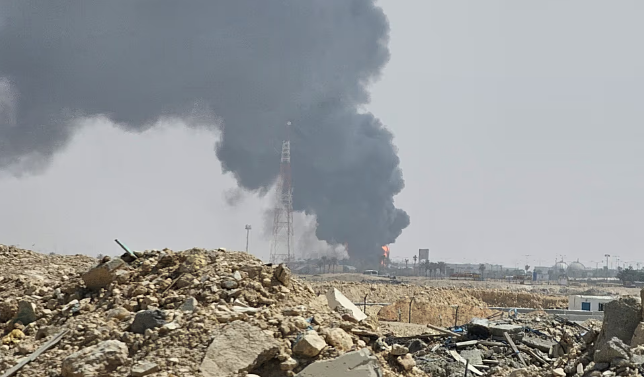
Oil prices remained near a five-month high on Tuesday as uncertainty over energy supplies during the war with Iran kept markets on edge, while concerns about inflation and artificial intelligence spending weighed on global equities.
Brent crude futures traded at around $110 a barrel ahead of the European market opening, while US West Texas Intermediate crude for next-month delivery remained above $104.
Traders continued to assess the risk of further Iranian attacks in the Strait of Hormuz, a vital route for global energy shipments, even as crude flows from the Persian Gulf showed signs of recovery.
ING commodities strategists said elevated prices despite relatively strong oil flows indicated that markets were maintaining a substantial risk premium because of uncertainty surrounding the conflict. They added that record tanker freight rates were increasing delivery costs.
The United States is considering allowing the sale of sanctioned tankers to return additional vessels to the legitimate shipping market. However, analysts said it remained unclear how much extra capacity the move could provide or how quickly it might reduce transport costs.
US Energy Secretary Chris Wright told Fox News that crude flows from the Gulf had recovered to about 80 per cent of pre-war levels, although supplies of refined petroleum products remained more constrained.
Gas markets also faced pressure. Asian spot liquefied natural gas prices rose to $30.40 per million British thermal units on Monday, their highest level since December 2022, according to Bloomberg. Concerns intensified after UK Maritime Trade Operations reported that an LNG tanker had come under fire from a small boat off Yemen on Saturday.
European gas prices remained elevated, with Dutch TTF futures for next-month delivery trading just below €88 per megawatt-hour on Tuesday morning.
European shares fall as investors assess risks
European stock markets opened lower after losses on Monday, when French equities and bonds came under pressure amid protests and concerns about the country’s public finances.
The FTSE 100 in London and France’s CAC 40 each fell 0.2 per cent at the opening, while Germany’s DAX declined more than 0.4 per cent.
British markets received some support from reports that Chancellor John Healey would not raise capital gains tax in next week’s Budget. Stronger-than-expected labour market figures also offered reassurance, with unemployment falling to 4.7 per cent in the three months to August from 4.9 per cent. The number of employees on company payrolls increased by 13,000, the largest rise in a year.
Across Asia, technology stocks led declines as investors questioned whether heavy spending on artificial intelligence would generate sufficient returns. Tokyo’s Nikkei 225 fell 1.3 per cent, Hong Kong’s benchmark lost 1.1 per cent and South Korea’s Kospi dropped more than 3.7 per cent.
AI infrastructure company Elice fell as much as 33 per cent on its Kosdaq debut, reflecting concerns about borrowing costs, competition and future profitability.
The declines came despite gains on Wall Street, where Amazon, Microsoft and Nvidia helped lift the Nasdaq. Investors are now watching earnings from SpaceX, Meta and Tesla for clues about technology companies’ financial performance and AI investment plans.
Gold slipped to around $4,152.80 an ounce, while the euro traded at $1.1225 against the US dollar. The dollar was little changed at 158.45 yen.