

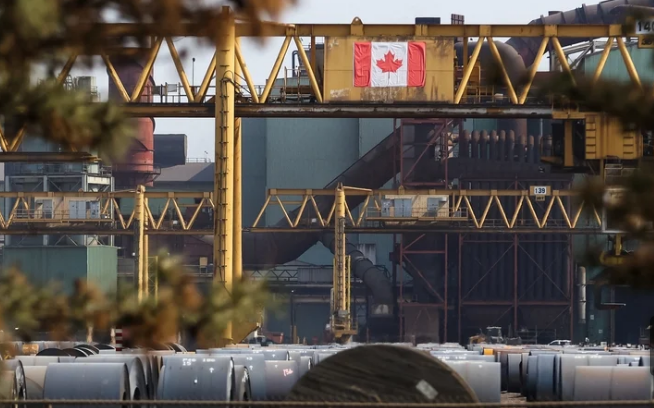
Canadian Prime Minister Mark Carney has sharply criticised the United States over its decision to double tariffs on steel and aluminum imports, calling the move “unjustified” and “illegal.” The U.S. tariff hike, which raises levies from 25% to 50%, has triggered alarm across international markets and heightened trade tensions between long-standing allies.
Speaking at a press conference in Ottawa, Mr. Carney warned that the tariffs would harm not only Canadian industry, but also American workers and manufacturers. “These tariffs are bad for everyone — for jobs, for competitiveness, and for the economic relationship we’ve spent decades building,” he said, adding that Canada, the largest foreign supplier of steel and aluminum to the U.S., would issue a response “soon.”
Ontario Premier Doug Ford echoed the federal government’s condemnation, accusing the Trump administration of reneging on a verbal agreement not to escalate the dispute. Mr. Ford claimed a deal had been reached with U.S. Commerce Secretary Howard Lutnick in exchange for Ontario lifting a surcharge on electricity exports to American states. “We can’t sit back and let President Trump steamroll us,” he warned, adding that retaliatory measures are “on the table.”
According to U.S. data, Canada exported nearly 6 million tonnes of steel and over 3 million tonnes of aluminum to the United States last year. The tariff increase comes as part of a broader push by Washington to secure more favourable trade terms, with officials asking allies to submit “best offers” to avoid further levies by early July.
Meanwhile, the European Union has also voiced concern. EU trade negotiator Maroš Šefčovič said ongoing discussions with U.S. counterparts in Paris were constructive but stressed that the latest tariff hikes were not helpful. “We should be working together on issues like overcapacity in steel — not making matters worse,” he said.
Trade talks between the U.S. and EU are reportedly progressing, but the global picture remains tense. China’s curbs on critical mineral exports have already forced some European carmakers to halt production, while supply chain disruptions mount.
Pressure is also building from other major economies. Mexico plans to seek an exemption, arguing the tariffs unfairly penalize a country that imports more U.S. steel than it exports. In Europe, companies like Austrian steelmaker Voestalpine and French spirits group Rémy Cointreau have warned of financial impacts due to market uncertainty and reduced U.S. sales.
Amid the turmoil, the OECD has lowered its global growth forecast, warning that the U.S. economy may bear the brunt of prolonged tariff disputes.