

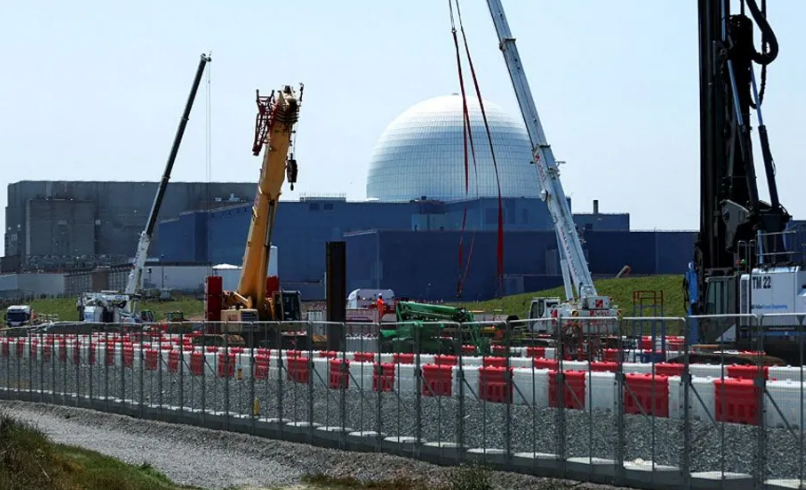
The estimated cost of constructing the Sizewell C nuclear power station in Suffolk has surged to £38 billion—nearly double the previous projection of £20 billion—prompting concerns about long-term affordability for consumers and transparency in government planning.
Announced on Tuesday, the revised figure comes as the UK government formally confirmed it will take a 44.9% stake in the project. Additional backing has been secured from a group of private investors, including British Gas-owner Centrica, French energy giant EDF, Canadian pension fund La Caisse, and Amber Infrastructure.
The project’s joint managing director, Julia Pyke, defended the increased cost, stating that earlier estimates did not properly account for inflation or project risks. She said the construction phase would add about £1 per month to household energy bills over the next decade, but added that once operational—expected in the mid to late 2030s—Sizewell C could reduce annual energy costs for consumers by around £2 billion.
Despite the projected benefits, the steep cost increase has sparked criticism. Alison Downes, director of campaign group Stop Sizewell C, called the announcement “astounding,” arguing that the near-doubling of the project’s cost was quietly revealed only after contracts had been signed. “The project has only crawled over the line thanks to guarantees that the public purse, not private investors, will carry the can for inevitable cost overruns,” she said.
In contrast, Tom Greatrex, chief executive of the Nuclear Industry Association, called the investment “money well spent,” citing the thousands of jobs the project is expected to create and the long-term energy security it offers. “Sizewell C will be the first true replica nuclear power station,” he said, referencing its close design similarities to Hinkley Point C, the UK’s first new nuclear plant in decades.
Hinkley Point C, located in Somerset, was originally slated to begin operation in 2017 at a cost of £18 billion. That timeline has now been pushed back to at least 2029, and costs have ballooned to approximately £46 billion.
Sizewell C, according to the Treasury, is expected to generate enough electricity to power six million homes and create 10,000 direct jobs, along with thousands more through its supply chain. The project marks the first nuclear investment by the government’s newly formed National Wealth Fund.
Energy Secretary Ed Miliband, who originally identified the site for nuclear development during his previous stint in government in 2009, described the announcement as a signal of renewed ambition. “It is time to do big things and build big projects in this country again,” he said.
Chancellor Rachel Reeves called the private sector commitments “a powerful endorsement” of the UK’s future as a global nuclear energy hub. Despite the nation’s early leadership in nuclear power, no new plant has opened since 1995. With most of the existing fleet set to close by the early 2030s, Sizewell C is now a key pillar of the government’s clean energy strategy.