

A mid-20th century experiment in Baltimore sewage helped unlock one of the most important scientific tools of the modern era — radiocarbon dating.
In the 1940s, American chemist Willard Libby set out to prove that a radioactive form of carbon, known as carbon-14, existed naturally in the environment. If confirmed, he theorised, the isotope’s steady decay could be used as a kind of “clock,” revealing how long ago plants or animals had died. Until then, carbon-14 had only been produced artificially in laboratories.
Libby’s unorthodox approach was to search for traces of the isotope in human waste. Reasoning that living organisms absorb carbon-14 and then deposit it in excrement, he collected samples from Baltimore’s sewage system. The experiment proved him right. The discovery confirmed that carbon-14 was present in nature in measurable concentrations, laying the foundation for radiocarbon dating.
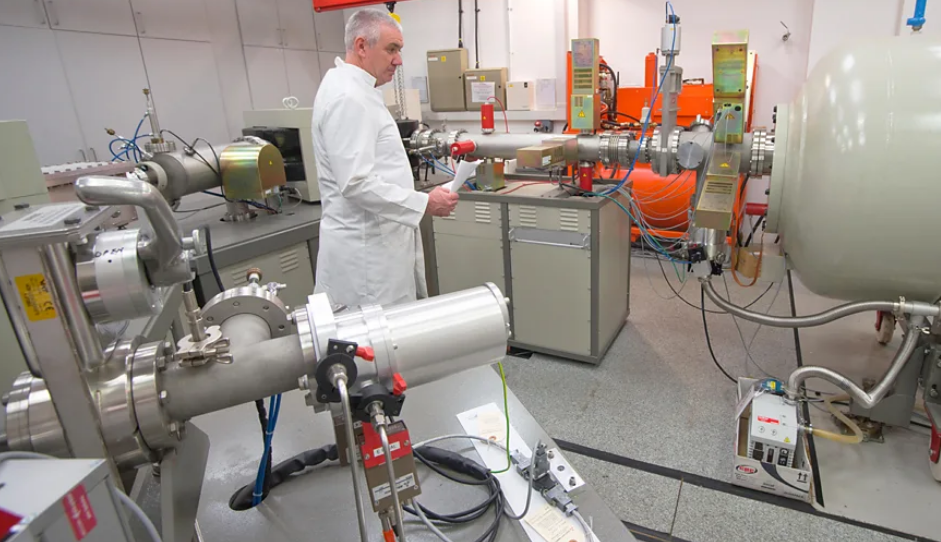
The breakthrough would go on to transform multiple fields. Since its introduction in the late 1940s, radiocarbon dating has been used to authenticate ancient artefacts, solve forensic cases, track illegal ivory trafficking, and deepen understanding of Earth’s climate history. Archaeologists have dated the Dead Sea Scrolls and Egyptian relics, while law enforcement agencies have used the method to verify whether ivory was harvested after international bans took effect.
Carbon-14 is formed high in the atmosphere when cosmic rays collide with nitrogen atoms, altering their structure. The newly created isotope bonds with oxygen to form radioactive carbon dioxide, which plants absorb during photosynthesis. Animals — and humans — ingest carbon-14 by eating plants or other animals. While organisms are alive, they maintain a constant level of carbon-14. But once they die, intake stops and the isotope begins to decay at a predictable rate. Measuring what remains allows scientists to calculate the time of death, sometimes with remarkable precision.
Libby, who won the Nobel Prize in Chemistry in 1960 for his work, later admitted that he and his colleagues initially kept their research quiet, fearing it sounded unbelievable. “You can’t tell anybody cosmic rays can write down human history,” he once remarked.
From a modest sewage experiment, Libby’s discovery became one of the most powerful tools for unlocking the past. Today, radiocarbon dating continues to underpin research in archaeology, climate science, and law enforcement, a lasting testament to how a simple hypothesis about sewage reshaped humanity’s ability to measure time itself.