


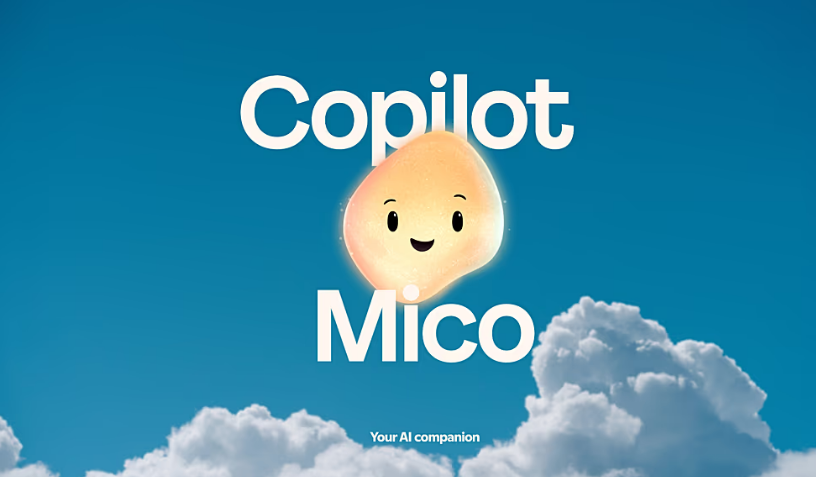
Nearly three decades after Clippy — the animated paperclip that became both famous and infamous for interrupting Microsoft Office users — Microsoft has introduced a new digital companion called Mico, a floating cartoon face designed to represent its Copilot assistant.
Unlike Clippy, which was often criticised for being intrusive, Mico is meant to be subtle, expressive and user-friendly. The character, shaped like a glowing blob or flame, reacts to conversations by changing colour and expression — smiling, frowning, or spinning with excitement.
Jacob Andreou, Microsoft’s corporate vice president of product and growth, described Mico as a step toward making technology more relatable without being overbearing. “When you talk about something sad, you can see Mico’s face change,” he told the Associated Press. “It’s about creating a companion you can really feel.”
Currently available only to U.S. users on laptops and mobile apps, Mico can be turned off easily — a feature that sets it apart from its predecessor, Clippy, which was notorious for popping up uninvited.
Experts suggest that the timing is right for such an innovation. “Microsoft pushed Clippy; we resisted it, and they got rid of it,” said Bryan Reimer, a research scientist at the Massachusetts Institute of Technology and co-author of How to Make AI Useful. “I think we’re much more ready for things like that today.”
Reimer explained that digital assistants with personality can help users feel more comfortable, especially those who might distrust purely mechanical interactions. “People who are less trustful of machines respond better to technology that feels a little more human,” he said.
Microsoft’s approach stands apart from others in the industry. While some companies are introducing flirtatious or overly human-like avatars, and others have opted for neutral, faceless designs, Microsoft says it wants Mico to strike a balance — engaging but not addictive.
Andreou emphasised that Mico is designed to be “genuinely useful,” not manipulative. “We don’t want it to just tell users what they want to hear or monopolise their attention,” he said.
The company also rolled out new Copilot features, including the ability to join group chats and a “voice-enabled Socratic tutor” for students — a move aimed at making its tools more educational and collaborative.
As more children and teenagers turn to digital assistants for learning and emotional support, regulators have raised concerns about potential risks. While Microsoft was not among the companies recently investigated by the U.S. Federal Trade Commission, the tech giant says it is prioritising safety and responsible design.
With Mico, Microsoft seems to be revisiting the idea behind Clippy — but this time, with a softer touch and a sharper understanding of what users actually want.