

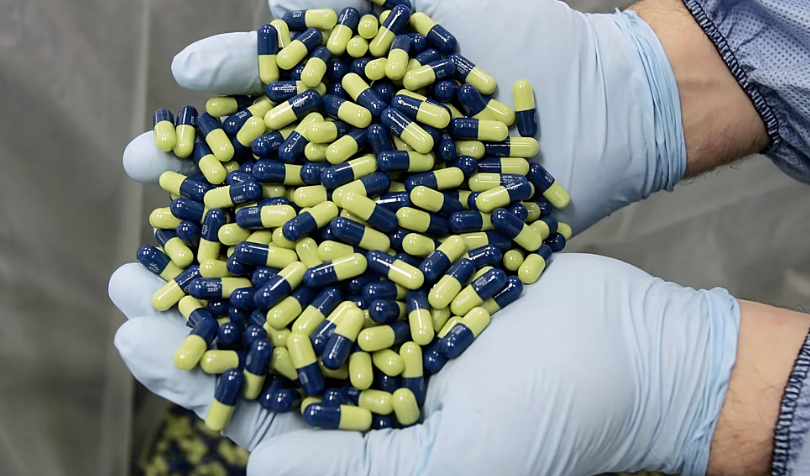
Germany’s reliance on Chinese-made medicines has deepened significantly, with new data showing that China supplied more than twice the volume of pharmaceuticals to Germany in 2024 than it imported from Europe’s largest economy. According to figures from the German government, Germany sold more than 15 million tonnes of pharmaceutical products to China last year, while imports from China reached over 33 million tonnes — underscoring the extent of the dependency between the two markets.
China has become indispensable to Germany’s healthcare system, particularly for essential drug components. A report by the pharmaceutical association Pro Generika e.V. found that 76 percent of all active ingredients used in antibiotics imported to Germany now originate from China. Even medicines produced in India or the United States often rely on Chinese raw materials.
The diabetes drug Metformin illustrates this global interdependence. Of the 22 key manufacturers worldwide, 15 are based in India and two in China, while 80 percent of the compound dicyandiamide — essential for producing Metformin — comes from China. German pharmaceutical firms, pressured by discount agreements with health insurers, have been forced to source cheaper materials abroad to remain competitive.
Experts warn that this cost-driven strategy has left Europe vulnerable. “Cheap production abroad was the result of a ‘cheap is cool’ mentality,” said Michael Müller, professor of pharmaceutical and medicinal chemistry at the University of Freiburg. He cautioned that bringing production back to Germany would be prohibitively expensive and constrained by a shortage of skilled workers. “We can’t produce the required raw materials ourselves. We are clearly dependent on China,” he said.
The consequences are already visible. The Federal Union of German Associations of Pharmacists reported that roughly 500 prescription drugs were difficult to obtain in 2024, with shortages hitting antibiotics for children and medications for asthma and ADHD particularly hard. “Germany used to be the pharmacy of the world. Now the pharmacy of the world is in China or India,” said Thomas Preis, the union’s president. “If factories there have production problems, this is immediately reflected in supply here.”
Economists have also voiced concern that China could leverage its pharmaceutical dominance for political gain, similar to how it restricted exports of rare earth minerals during trade tensions with the United States. While some experts believe Germany would pay higher prices to secure medicines in a crisis, others argue that long-term resilience requires innovation and investment in new drug development.
“The global network is not an enemy but an opportunity — if we use it wisely,” Müller said, calling for Germany to focus on developing advanced manufacturing technologies and pioneering new treatments rather than competing on low-cost production.