


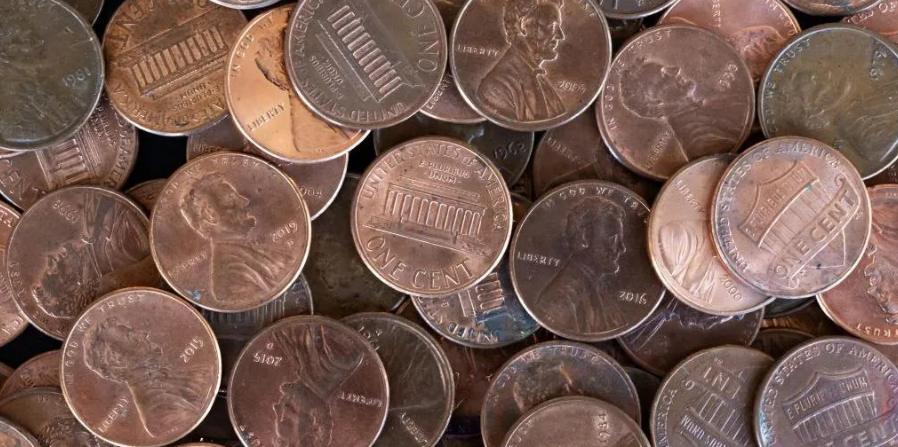
American businesses are facing unexpected turbulence at the cash register as the nation grapples with a shortage of pennies, following the Trump administration’s decision to stop minting the one-cent coin earlier this year.
The U.S. Mint halted penny production in May after President Donald Trump declared the coin “wasteful and too expensive,” vowing on social media to “rip the waste out of our great nation’s budget, even if it’s a penny at a time.” The Treasury Department had predicted the shortage would not hit until 2026 — but coins have vanished from circulation far sooner.
Now, retailers across the country are struggling to make exact change. With banks unable to obtain pennies from the federal government, the shortage has filtered down to businesses that rely heavily on cash transactions.
“We first heard about the issue in late August, early September,” said Dylan Jeon, senior director of government relations for the National Retail Federation (NRF). “It’s really impacting any business that deals with cash payments.”
To cope, many stores have begun rounding cash transactions up or down to the nearest five cents. “That adds up really quickly,” Jeon noted, warning that businesses could lose up to four cents per sale if they round down. “It’s unsustainable.”
The problem is especially complex in cities like New York, where retailers are legally required to provide exact change. Others prohibit price differences between cash and card payments, creating further confusion.
In response, several major chains are urging customers to pay in exact change or electronically. Some have even launched promotions encouraging people to bring in spare coins.
Convenience stores have been hit particularly hard. “We’re seeing some of the biggest impacts in cash-heavy businesses,” said Jeff Lenard, spokesperson for the National Association of Convenience Stores. Kwik Trip, a major Midwest chain, announced it would round down to the nearest nickel, estimating losses of up to $3 million this year.
The penny, first introduced in 1793, joins a list of discontinued American coins such as the half-cent and 20-cent pieces. Yet, its absence is being felt more deeply than expected. “People don’t want the penny — until they can’t get it back in change,” Lenard said.
While it costs nearly four cents to produce a single penny, advocates argue that eliminating the coin harms low-income Americans who rely on cash. “These are people without access to banking services,” said Mark Weller, executive director of Americans for Common Cents. “You hurt lower-income groups when you start rounding transactions.”
Weller also warned that minting more nickels — which cost nearly 14 cents each to produce — could erase any financial savings.
As the shortage persists, experts are calling for federal guidance to standardize rounding practices and help stabilize the cash economy. “There will always be pennies out there,” Jeon said. “They’re just sitting forgotten — in jars, couches, and pockets — instead of in circulation.”