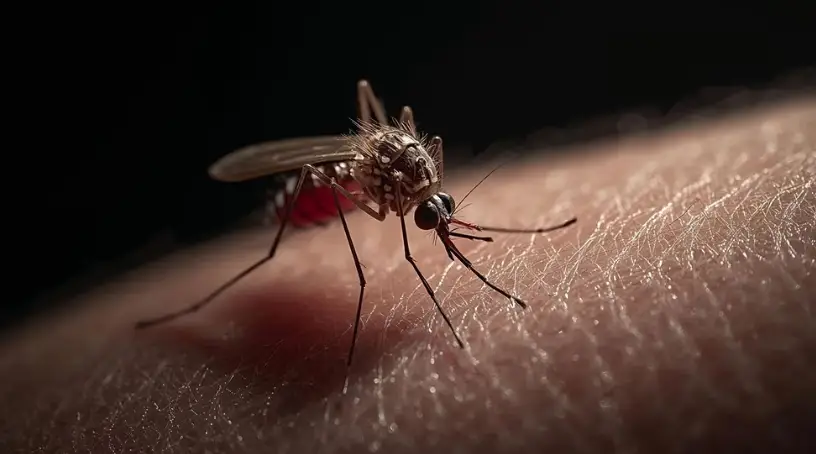
A new report by global health group Unitaid highlights the growing promise—and persistent challenges—of using genetically modified mosquitoes to combat life-threatening diseases such as malaria, dengue, and chikungunya. The report outlines where genetic modification could transform disease control and where its risks may still outweigh the benefits.
Mosquito-borne diseases continue to kill hundreds of thousands each year, with malaria alone responsible for more than 608,000 deaths annually, according to the World Health Organization (WHO). Decades of research and interventions, including insecticide-treated bed nets, have saved millions of lives. Yet, scientists have long sought a more permanent solution—one that stops mosquitoes from transmitting infections altogether.
Since the 1960s, researchers have explored altering mosquitoes’ DNA to limit their ability to reproduce or carry disease-causing parasites. Some genetic modifications make mosquitoes sterile, while others prevent their offspring from maturing or becoming effective disease vectors. “The concept of actually changing the genome of the mosquito to make it not susceptible to parasites is a complete paradigm shift,” said Jan Kolaczinski, malaria and vector control expert at Unitaid.
Field trials of genetically modified mosquitoes in countries such as Burkina Faso, Brazil, Malaysia, and the United States have shown encouraging results, significantly reducing mosquito populations in controlled settings. However, the technology remains controversial. Environmental groups have voiced strong concerns about gene drives—genetic mechanisms designed to ensure that modified traits are inherited by nearly all offspring—warning that such interventions could have unforeseen ecological consequences.
Despite these concerns, Unitaid’s report identifies the self-sustaining gene drive method as the most promising strategy to eliminate mosquito-borne diseases. In this approach, genetic alterations are passed to 100 per cent of mosquito offspring, allowing the modified traits to spread through the population until disease-carrying mosquitoes are effectively replaced. “This could allow us to control malaria at a scale that is unprecedented, because the mosquito would almost control itself,” Kolaczinski said, describing the approach as “the Holy Grail” of disease control.
Yet, the report cautions that permanently altering a species could disrupt ecosystems in unpredictable ways. Other scientists are exploring alternative solutions, such as infecting mosquitoes with the Wolbachia bacteria, which limits their ability to transmit viruses like dengue and chikungunya.
Kolaczinski emphasised that multiple strategies will likely be needed, depending on regional conditions and the diseases involved. “You wouldn’t want to put all your eggs in one basket,” he noted. Beyond scientific challenges, securing global funding and political support for genetic modification remains difficult, particularly amid recent cuts to health budgets.
Even with those obstacles, Unitaid argues that gene-drive mosquitoes may represent the most realistic path toward eradicating malaria, which infected 263 million people in 2023. “I don’t really see any other means to get to zero malaria in malaria-endemic areas without a truly game-changing tool,” Kolaczinski said.