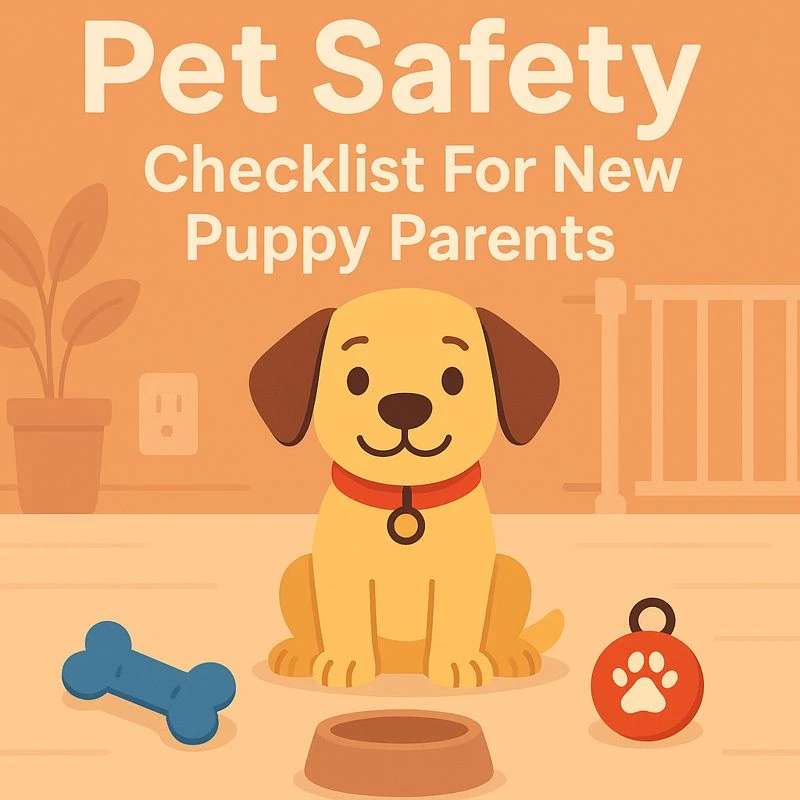
Bringing a new puppy home feels exciting and a bit scary at the same time. You want that little nose and wagging tail to stay safe, healthy, and happy. You also want your home to survive sharp teeth, fast zoomies, and daily chaos. A clear checklist helps you stay calm and keeps your puppy out of trouble.
A young dog explores everything with mouth, nose, and paws. It has no idea what hurts, what breaks, or what sends you straight to the vet. Your job is to shape the space, set simple rules, and stay ready for surprises. You do not need fancy gear. You need time, patience, and a plan that fits your daily routine.
This Pet Safety Checklist For New Puppy Parents covers three big areas. You will prepare your home and yard. You will set up health care, ID, and basic gear. You will build daily habits and a simple emergency plan. Take each part at your own pace and adjust the ideas to your puppy and your family.
Prepare your home before your puppy arrives
Safe setup starts before the first paw steps inside. Walk through your home and look at every room from puppy level. Kneel on the floor and scan from wall to wall. Anything sharp, tiny, loose, or fragile needs a safer place.
Start with cables and sockets. Tuck loose cables behind furniture or inside cable covers. Use outlet covers in rooms where the puppy spends time. Move light floor lamps that tip over easily. Put phone chargers and laptop cords away as soon as you finish using them.
Look at small objects on low tables and shelves. Remote controls, coins, batteries, hair ties, Lego pieces, crayons, and tiny toys fit in a puppy mouth. Store them in boxes with lids or in higher drawers. Check handbags and backpacks on chairs and hooks. Many hold gum, medicine, or snacks that can harm dogs.
Now check houseplants. Some common plants upset the stomach. Some do more damage. Place unknown plants in rooms the puppy cannot reach, or on high shelves. Choose heavy pots that do not fall over when nudged.
Secure cleaning products next. Keep bleach, detergents, toilet blocks, fabric softener, and dishwasher pods in closed cupboards. Add simple child locks if a curious nose can push the door open. Put perfumes, nail polish remover, and strong sprays in higher cabinets.
Create clear boundaries inside the home. Use baby gates to block stairs, laundry rooms, storage spaces, and balconies. Add a sturdy screen in front of fireplaces and wood stoves. The surface looks interesting even when it feels cold.
Create a safe and cozy puppy zone
A puppy zone gives your dog a calm place to rest and keeps mess in one area. It also protects furniture during the first months. Pick a quiet corner of the living room or kitchen where you spend plenty of time. Your puppy stays close to you but still has a little den.
Choose a crate or playpen that feels safe, not cramped. Your puppy needs to stand up, turn around, and lie down with legs stretched. Add a soft bed or mat. For strong chewers, start with a flat, sturdy mat and a simple blanket that dries fast.
Place water in a heavy, wide bowl that does not tip. For playful pups that splash, use a base or stand that holds the bowl still. Keep food bowls a short distance from the bed. Many dogs rest better when the sleeping spot sits apart from the food area.
Offer a few safe chew toys. Pick strong rubber toys and simple rope toys without tiny parts. Avoid toys with plastic eyes, bells, or thin squeakers that break easily. Rotate toys every few days. Fresh toys help your puppy focus on allowed items instead of table legs and shoes.
Store puppy gear near the zone. Keep towels, poop bags, wipes, spare toys, and a small brush in one basket. This simple setup saves time during house training and after wet walks. It also helps every family member follow the same routine.
Puppy proof floors, doors, and windows
Most puppy accidents start at ground level. Begin with floors. Pick up shoes, slippers, and laundry piles. Many dogs chew leather and fabric. Some swallow socks, and that can block the gut. Use closed baskets for laundry in every room.
Check rugs and carpets. Fix corners with non slip pads. A sliding rug turns running pups into skidding pups. That raises the risk of sprains and bumps. Move loose rugs out of busy play areas until your puppy gains better coordination.
Look at doors. Add door stoppers or slow close hinges so doors do not slam on tails and paws. Ask everyone to close outside doors fully every time. A small gap can invite escapes. For sliding doors, place bright tape at eye level so people do not walk into the glass during play.
Now check windows and balconies. Make sure window screens sit tight in the frame. A curious puppy leans or jumps toward birds and street sounds. Add safety locks for tilt and turn windows. Keep balcony doors closed unless you stand next to your dog. A puppy should never stay alone on a balcony.
In homes with stairs, use baby gates at the top and bottom. Young dogs can tumble down quickly and hurt joints or spine. Later, after your dog grows stronger and learns how to walk stairs with care, you can remove the gate.
Safe food and water habits
Food safety matters from the first day. Pick a complete puppy food that matches age and size. Follow the feeding table on the package as a starting point. Your vet can help you adjust portions based on weight and body shape. Many pups eat three or four small meals each day and do well with that rhythm.
Choose bowls that suit your dog. Small puppies need shallow bowls. Large breeds need wider, heavier bowls. Stainless steel or ceramic bowls clean easily and do not hold strong smells. Wash bowls with hot water after meals and replace water several times per day.
Store dry food in a sealed bin in a cool, dry place away from heaters and sun. Close the original bag before you place it in the bin. This keeps food fresh and safe from insects and mice. Put treats in closed containers, not in open bags on the counter.
Human food brings extra risk. Keep chocolate, xylitol sweeteners, grapes, raisins, onions, garlic, alcohol, and caffeine out of reach. Wipe counters after cooking and sweep or mop the floor. Put trash in a bin with a lid or behind a cupboard door.
Set one clear rule for treats. No random bites from plates or from the table. All snacks come from the main caregiver, or everyone follows the same simple treat rules. This protects your puppy from stomach trouble and supports training at the same time.
Vet care, vaccines, and parasite control
Health safety starts with a trusted vet. Book the first visit within the first week at home. Bring breeder or shelter papers, vaccine cards, and any test results. The vet checks weight, heart, lungs, eyes, ears, teeth, skin, and joints. You both set a plan for shots and worming.
Ask which diseases matter most in your area. Many puppies get shots against parvo, distemper, hepatitis, and leptospirosis. In some places, dogs need rabies shots and regular tick or mosquito protection. Follow the schedule exactly. Keep notes in a pet passport or health booklet.
Talk about spay or neuter timing during one of the early visits. Breed size, growth, and health play a role here. Your vet can guide you based on these facts and on behavior. This talk helps you plan time off work and quiet days at home for healing.
Plan parasite control with care. Fleas, ticks, and worms harm dogs and can reach people as well. Your vet can suggest pills, spot on treatments, or collars that fit your dog and your climate. Mark treatment dates on a calendar or in a phone app so you stay on track.
Learn warning signs that need quick help. Sudden tiredness, poor appetite, vomiting, diarrhea, coughing, heavy breathing, strong scratching, or constant shaking of the head deserve attention. Write down when each sign started, how often it appears, and what your puppy ate and did that day. Share those details with your vet.
ID and basic safety gear
Strong ID brings lost dogs home faster. Many regions ask for microchips and official registration. Ask your vet to scan your puppy. If no chip shows up, the vet can place one under the skin between the shoulders. The process takes a few seconds. Register the chip number with your contact data and update it after any move or phone change.
Pick a collar or harness with a snug, comfortable fit. You should slide two fingers flat between strap and neck or chest. Many small or flat faced breeds do better with a harness that spreads pressure across the chest.
Add an ID tag with puppy name and at least one phone number. Some owners list the city or postal code. Many families skip a full home address to keep more privacy. Choose what feels safe for you.
Choose a strong leash with a solid clip. A length around 1.2 to 2 meters works well for daily walks in most towns. Keep long extendable leashes for open areas, after your dog learns a good recall. In busy streets, a shorter fixed leash gives more control.
Set up a small walk station near the main door. Hang collars, harnesses, leashes, and a poop bag holder on hooks. Keep a box with spare tags, extra clips, and reflective bands for night walks. This station saves time and makes every outing smoother.
Outdoor safety at home and on walks
Many accidents happen outside the home. Start with your yard or garden. Check fences for gaps, loose boards, and spaces under gates. A small dog squeezes through tiny holes. Patch weak spots with wire mesh, bricks, or extra boards. Close compost heaps, ponds, and pools with covers or barriers.
Look for toxic plants, sharp tools, and open bags of fertilizer or weed killer. Move them into a locked shed or onto high shelves. After mowing and trimming, collect all clippings. Do not leave sharp sticks or plastic pieces on the ground. Store rakes, shears, and shovels in a shed with the door shut.
On walks, keep your puppy on a leash near roads and bike lanes. Teach a strong sit and wait at each curb. Reward with tiny treats and kind words. Cross only when the way looks clear from cars, bikes, scooters, and runners. Stay alert near driveways and parking areas.
Watch the ground. Broken glass, metal scraps, sharp stones, and hot asphalt hurt paws. In summer, press your hand on the pavement for a few seconds. Choose grass or shaded paths if the surface feels too hot. In winter, rinse paws after walks to wash off salt and grit.
Dog meetings need care. Ask owners if their dog likes puppies. Keep leashes loose so both dogs can move and sniff in a curve. Step away at once if any dog stiffens, stares, or growls. Give your puppy more space and a small treat for staying calm as you move on.
Safe play, training, and family rules
Play builds your bond and shapes behavior. It burns energy and keeps boredom away. Choose toys that match your dog’s size and bite strength. A large dog tears tiny soft toys apart in seconds. A small dog struggles with heavy balls. Many puppies enjoy rubber balls, rope toys, and simple soft toys with solid seams.
Set house rules for play. No chasing children through the home. No rough tug games near stairs or around glass furniture. Use gentle indoor games such as short fetch in a hallway, nose work with treats in boxes, and quick training sessions with basic cues.
Training acts as a safety tool. A good recall, a clear sit, and a solid leave it command protect your dog every day. Keep sessions short, around five to ten minutes, two or three times each day. Reward with small food pieces, praise, and a bit of play. Stop on a win so your puppy ends the session with confidence.
Teach children how to treat the puppy. Show them how to pet gently on the side of the body. Explain that the dog decides how long a cuddle lasts. No sitting on the dog, no pulling ears or tail, no waking the puppy just for fun. Print simple rules and place them on the fridge so guests can see them as well.
Watch body language during play and cuddles. A relaxed puppy has loose muscles, soft eyes, and a tail that moves at mid height. A stressed dog licks lips, yawns often, tucks the tail, stiffens, or hides. When you see these signs, pause play and guide your dog back to a quiet space.
Car travel and trip safety
Car rides need their own plan. Dogs that ride loose distract drivers and can fly forward during sudden stops. Use a travel crate, a crash tested harness, or a strong barrier that separates the cargo area from the seats.
Place crates sideways or against the back seat for more stability. Line the bottom with a non slip mat or a thin bed so your puppy does not slide. Use harnesses that attach to tested seat belt clips. Clip the belt to the harness chest ring, not to the collar.
Never leave a puppy alone in a parked car. Sun and hot weather raise the temperature fast. Cold wind and low temperatures drop it quickly. Plan errands so one person stays outside with the dog. Another option is to drive straight from home to your main stop and back.
Pack a small travel kit for the car. Add water, a foldable bowl, poop bags, an extra collar and leash, a towel, and a copy of vaccine records. Include a familiar toy or blanket. A known smell helps your puppy relax in new places.
For longer trips, plan breaks every two or three hours. Let your dog drink, stretch, and relieve itself on leash in safe rest areas. Many puppies travel better with a light meal some time before the drive and small snacks during stops instead of one big meal right before the trip.
Daily routines and a simple emergency plan
Clear routines keep puppies calm and safe. Set regular times for meals, walks, play, training, and rest. Dogs feel more secure with a stable pattern. This rhythm lowers chewing on furniture, loud barking from stress, and house accidents.
Agree on tasks inside the family. One person can handle the morning walk and breakfast. Another person can take midday play and a short training round. A third person can manage the last evening walk and a final water check. Older children can help with brushing and water refills under supervision. Write tasks on a whiteboard so everyone remembers.
Prepare for emergencies during a quiet moment. Save phone numbers for your vet, the nearest 24 hour clinic, and poison control in your phone and on the fridge. Print your contact data and vet data on a small card that stays in your wallet. Helpers can reach your home and your dog if something happens to you outside.
Create a simple pet first aid kit. Add sterile gauze, bandages, adhesive tape, blunt scissors, tweezers, saline liquid, a digital thermometer, and disposable gloves. Ask your vet which extra items fit your dog and your local rules. Store the kit where you keep your own first aid box.
Think through fire, flood, or gas leak plans. Pick one person who grabs the dog, clips on the leash, and heads outside. Keep an extra collar and leash close to the main exit door. Store a small travel crate nearby. Practice loading the puppy into the crate and leaving the home in a calm way so this move feels normal, not scary.
Quick Pet Safety Checklist For New Puppy Parents
Use this short list as a regular reminder.
- Cables covered, outlets blocked, small items off the floor
- Cleaning products, medicine, and human snacks stored in closed spaces
- Puppy zone set up with crate or pen, bed, water, and safe toys
- Gates on stairs, safe windows and balcony doors
- Fence checked for gaps, yard cleared of sharp tools and toxic plants
- Puppy food stored in sealed bin, trash in closed bin
- Vet chosen, first visit booked or done, vaccine and parasite plan in place
- Microchip placed and registered, ID tag on collar or harness
- Safe leash and collar or harness near the door, reflective gear ready for night
- Car travel gear ready, no puppy left alone in parked cars
- Family and guests know the rules for play, treats, and child dog contact
- Emergency contacts saved, pet first aid kit stocked and easy to reach
Pet safety grows from many small actions every day. You protect your puppy when you scan rooms, keep simple routines, and stay ready for the unexpected. For extra ideas on home setup, daily habits, and helpful gear, you can explore Pet Safety, a site that focuses on clear, practical tips for everyday dog care.