

China will impose tariffs of up to 19.8% on pork imports from the European Union, a significant reduction from earlier preliminary rates that reached as high as 62.4%, the country’s Commerce Ministry announced on Tuesday. The final tariff rates, ranging from 4.9% to 19.8%, are due to take effect on Wednesday and will remain in place for five years.
The decision follows a lengthy investigation launched in June 2024 into EU pork imports, which concluded that these products were harming China’s domestic pork industry. The probe was initiated after the EU imposed provisional tariffs on China-made electric vehicles last year. In recent months, Beijing also levied anti-dumping duties on European brandy, particularly cognac from France, though some major producers received exemptions. Imports of EU dairy products have also been subject to anti-dumping reviews.
China’s pork tariffs primarily target EU exporters in Spain, the Netherlands, and Denmark. According to the Commerce Ministry, the duties apply to all types of pork products, whether fresh, chilled, frozen, dried, pickled, smoked, or salted. The ministry stated that its conclusions were reached in an “objective, fair and impartial manner.”
The ministry said that EU companies were found to be dumping pork and pig by-products in China, selling them at prices below production costs or domestic market rates, thereby harming China’s pork sector. Earlier in September, preliminary anti-dumping duties ranged from 15.6% to 32.7% for EU firms that cooperated with the investigation, while other companies faced levies of up to 62.4%.
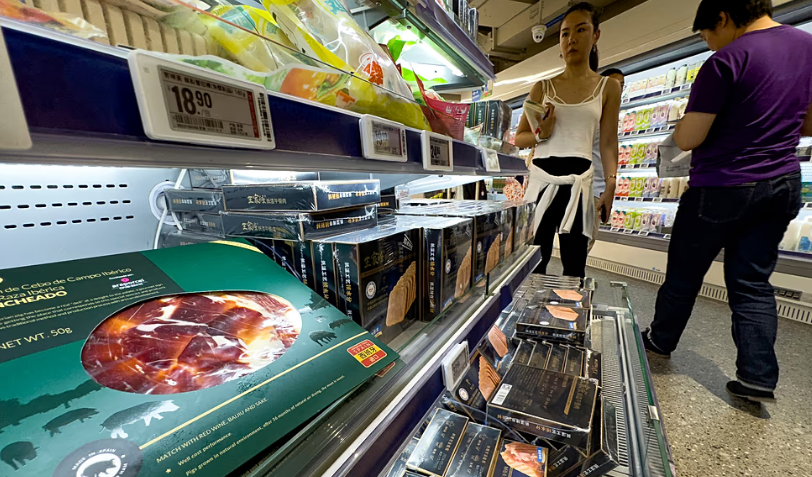
The EU maintains a large trade deficit with China, exceeding €300 billion last year, but remains a significant exporter of pork and related by-products, including ears, snouts, and feet—items considered delicacies in China. However, China is currently experiencing a surplus of these products, linked in part to an economic slowdown that has dampened consumer spending.
EU pork exports to China peaked at €7.4 billion in 2020, when Beijing relied heavily on imports to offset losses from swine disease outbreaks that decimated domestic pig farms. Since then, China has gradually reduced imports as domestic herds have recovered.
The new tariffs are likely to have a substantial impact on major EU pork-exporting nations. Spain, the Netherlands, and Denmark are expected to bear the brunt, while Chinese authorities have emphasized that the measures are designed to protect domestic producers rather than punish EU partners.
The decision reflects ongoing tensions between China and the EU over trade practices, highlighting Beijing’s use of tariffs and anti-dumping duties as tools to address perceived unfair trade practices while supporting domestic industries.