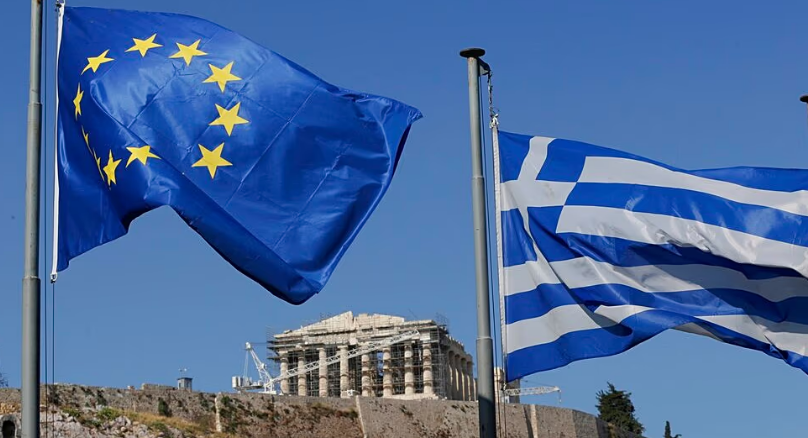
Greece has made an early repayment of €5.3 billion in loans from its first eurozone bailout programme, marking a significant step in the country’s long-term effort to stabilise public finances. The repayment, originally scheduled to mature after 2031 or even into the 2040s, reduces future interest costs and signals Greece’s growing reliance on market-based financing.
The Greek Loan Facility (GLF), coordinated by the European Commission, was the first emergency rescue mechanism created in the euro area. Established during the 2010 sovereign debt crisis, the GLF provided crucial support when Greece lost access to financial markets, helping the country avoid immediate default and limiting risks to other EU members.
Local reports indicate that retiring this debt ahead of schedule could save Greece around €1.6 billion in interest payments through 2041. Analysts also expect the country’s debt-to-GDP ratio, currently the highest in the eurozone, to fall below 120 percent by 2029.
Greece’s debt crisis, which spanned from 2009 to 2018, was triggered by years of fiscal mismanagement, large deficits, and weak economic competitiveness. The country received three international bailouts from the EU and the International Monetary Fund, accompanied by severe austerity measures and structural reforms. The GLF loans were the first stage of this process, followed by a debt restructuring in 2012 that shifted losses onto public institutions, and a stabilisation programme under the European Stability Mechanism (ESM) that concluded in 2018.
Since the crisis, Greece has regained investor confidence and restored investment-grade credit ratings. Borrowing costs have fallen, and Greek 10-year bond yields have at times dropped below those of larger eurozone economies such as Italy and France, a striking reversal from the high-risk perception of Greek debt during the crisis.
Prime Minister Kyriakos Mitsotakis pledged in 2023 to make the early repayment, which was funded from a special savings account rather than new borrowing. The European Stability Mechanism welcomed the move, with Managing Director Pierre Gramenia saying, “Greece continues to make significant progress in strengthening its economy. This additional early repayment of the GLF loan sends another positive signal to financial markets, improves Greece’s debt structure, and reflects the country’s improving fiscal position.”
Critics argue that while early repayment improves Greece’s debt profile, it comes at a cost to domestic liquidity. Opposition parties suggest that the funds could have been used for public investment, wage support, or targeted relief to households and businesses still facing high living costs.
As of June 2025, Greece’s total public debt stood at approximately €403.2 billion, around 151 percent of GDP. The early repayment of GLF loans demonstrates both the progress Greece has made since its debt crisis and the ongoing balancing act between strengthening fiscal credibility and supporting domestic economic needs.