
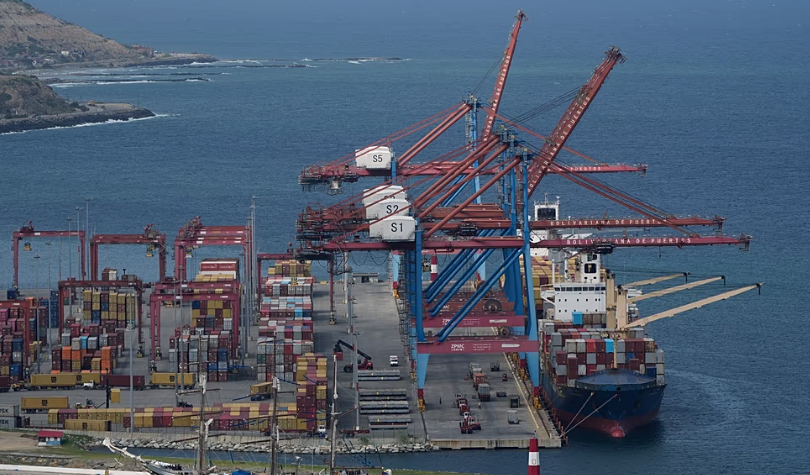
President Donald Trump’s decision to block sanctioned Venezuelan oil shipments has sparked warnings from lawmakers and legal experts that the United States could be edging toward an undeclared war. By deploying naval forces to intercept tankers linked to Venezuelan leader Nicolás Maduro, the administration is applying sanctions enforcement in untested legal territory.
The White House insists the blockade targets only vessels facing US economic penalties and does not affect civilians, a distinction that would otherwise constitute an illegal act of war. However, critics say seizing sanctioned oil could provoke a Venezuelan military response.
“My biggest fear is this is exactly how wars start and how conflicts escalate out of control,” said Representative Jason Crow, a Democrat from Colorado and Iraq veteran. “And there are no adults in the room with this administration, nor is there consultation with Congress. So I’m very worried.”
Claire Finkelstein, a national security law professor at the University of Pennsylvania, warned that the tactic could push the US into armed conflict without congressional approval. “The concern is that we are bootstrapping our way into armed conflict,” she said. “We’re upping the ante to try to get them to engage in an act of aggression that would then justify self-defense on our part.”
Republican lawmakers largely support Trump’s approach. Representative Michael McCaul of Texas compared the action to targeting Iranian oil, saying, “Just like with the Iranian shadow tankers, I have no problem with that. They’re circumventing sanctions.”
Trump has declared the US is in “armed conflict” with drug cartels and has ordered strikes on 28 alleged smuggling boats, resulting in at least 104 deaths since early September. He has linked Maduro to drug trafficking and hinted at potential land strikes, prompting scrutiny in Congress. Democrats have sought war powers resolutions to limit further military action, but Republicans have blocked these measures. Senator Roger Wicker, Republican chairman of the Senate Armed Services Committee, has ended his panel’s investigation into a September 2 strike, citing “sound legal advice.”
Venezuela has pushed back against the blockade, which followed the seizure of a sanctioned tanker. The country relies heavily on oil revenue, and Maduro’s son, Nicolás Maduro Guerra, said the US move threatens the economy. “We value peace and dialogue, but the reality is we are being threatened by the most powerful army in the world,” he said.
The Pentagon has described the action as a “quarantine” rather than a blockade, noting that under international law a true blockade constitutes an act of war. A blockade is designed to cut off all maritime traffic to an enemy state, while a quarantine targets specific illegal activity.
Legal experts caution that the selective naval enforcement of oil sanctions blurs the line between law enforcement and acts of war. Emory University law professor Mark Nevitt described it as a “junior varsity blockade,” while Texas Tech professor Geoffrey Corn suggested it may be aimed at pressuring Maduro to relinquish power rather than provoking a broader conflict.
The Trump administration’s strategy highlights tensions over US enforcement of sanctions abroad and raises questions about the limits of presidential authority in deploying military power.