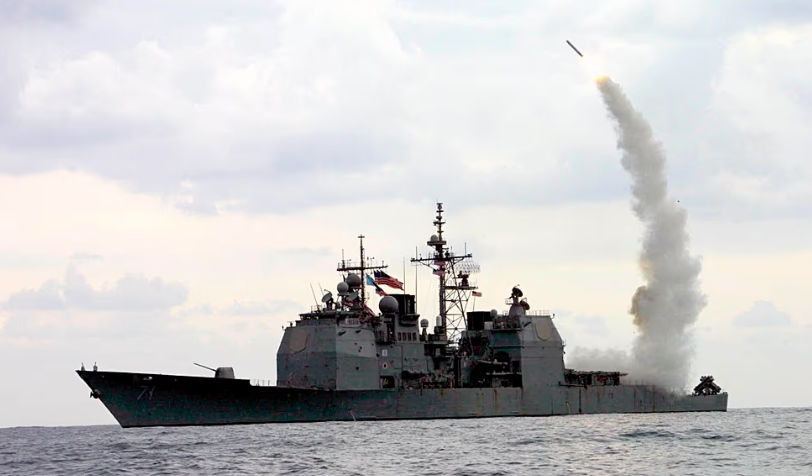
The United States carried out “powerful and deadly” airstrikes against Islamic State-linked militants in northwestern Nigeria on Thursday, US President Donald Trump announced on social media. The strikes targeted groups “viciously killing mostly innocent Christians,” Trump wrote, describing the operation as a major escalation in the long-running fight against Islamist extremist groups in the region.
US Africa Command (AFRICOM) confirmed that Thursday’s attack was a joint operation, conducted in coordination with Nigerian authorities as part of ongoing intelligence sharing and strategic planning. Preparations for potential military action in Nigeria had been ordered by Trump in November, aimed at countering insurgent groups in areas where local forces are stretched thin.
The strikes are expected to bolster Nigeria’s military efforts, which face multiple crises across the country. In Sokoto and other northern states, the Nigerian armed forces regularly conduct air operations targeting militant hideouts. The government has also embarked on mass recruitment of security personnel to strengthen its capabilities against insurgent networks.
On Friday, Nigeria’s foreign ministry said the country remains engaged in “structured security cooperation with international partners, including the United States of America, in addressing the persistent threat of terrorism and violent extremism.” The ministry highlighted that such collaboration has enabled precise airstrikes against terrorist targets in the northwest. President Bola Ahmed Tinubu reaffirmed Nigeria’s commitment to religious tolerance, stressing that security challenges affect citizens “irrespective of religions and regions.”
Trump previously designated Nigeria a “Country of Particular Concern” over what he described as an “existential threat” to the Christian population. This designation allows the US to impose sanctions on countries engaged in serious violations of religious freedom. Analysts note that Nigeria’s security crisis affects both Christians, who are predominantly in the south, and Muslims, who are the majority in the north.
Jihadist groups including Boko Haram and the Islamic State of West Africa have operated in northeastern Nigeria for over a decade, killing thousands, mostly Muslims, according to the Armed Conflict Location & Event Data Project (ACLED). In addition to Boko Haram offshoots, the Islamic State’s Sahel Province, locally known as Lakurawa, has a presence in northwestern regions. Officials have not specified which group was targeted in Thursday’s strikes.
Experts say attacks by armed groups are often facilitated by weak state presence, high poverty, hunger, and unemployment in remote areas, which also make recruitment easier. Nigeria’s Minister of Defence, Christopher Musa, has previously noted that military operations alone address only 30 percent of the country’s security challenges, with the remainder dependent on governance and structural reforms.
The US strikes mark a significant step in international support for Nigeria’s efforts to contain Islamist militant threats, highlighting the complex interplay between military action and broader socio-economic and governance issues in Africa’s most populous country.