European equity markets opened 2026 with strong momentum, pushing several major indices to record levels, including Germany’s benchmark DAX. While January is not traditionally the strongest month for European stocks, recent years have seen unusually robust gains, particularly for a handful of companies.
Historical data shows the Euro STOXX 50 rises an average of 0.26% in January, finishing higher 56% of the time over the past two decades, according to TradingView. Germany’s DAX gained 0.44% on average with a 57% success rate, while France’s CAC 40 advanced 0.58%, also positive 57% of the time. Italy’s FTSE MIB stands out slightly, posting a 1.23% average gain and finishing higher 62% of the time.
Although months like April and November have historically produced stronger and more consistent returns, January has delivered some remarkable rallies in recent years. The Euro STOXX 50 rose 9.75% in January 2023 and 7.98% in 2025. The DAX climbed 8.65% in 2023 and 9.16% in 2025, reflecting renewed investor interest in cyclical and industrial stocks at the start of the year.
Certain individual stocks have emerged as reliable January performers. French engineering and technology consultancy Alten SA gained an average of 4.13% in January over the past 20 years, with a 71% success rate. Recent strong months include gains of 20.46% in 2023, 6.84% in 2024, and 12.9% in 2025, though the global financial crisis caused steep declines in 2008 and 2009.
Hospitality group Accor SA has also consistently performed well in January, rising 4.3% on average over the past two decades, with positive returns in the past four years. In January 2023, Accor surged 28.1% as travel demand rebounded sharply after the pandemic.
French IT consultancy Sopra Steria Group SA has delivered one of the strongest January records among mid-to-large European stocks. Shares have gained an average of 5.75% during the month over the last 20 years, rising 76% of the time. The best performance came in January 2012 with a 23.25% rally, while the worst was during the 2008 financial crisis.
German life sciences supplier Sartorius AG also shows strong seasonal performance, with an average January gain of 5.85% and a 67% win rate. Its standout month was January 2025, when the stock jumped 30.11%, while the weakest was a 12.96% decline in 2008.
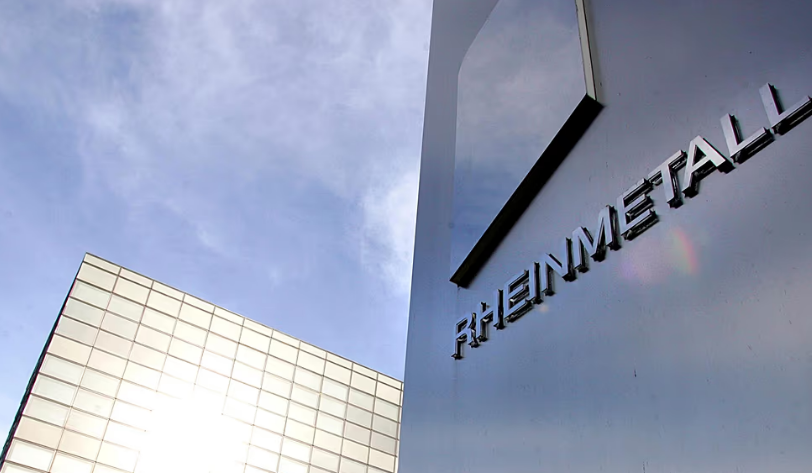
At the top of the list is German defence company Rheinmetall AG, which has shown an average January gain of 7.74% over the past 20 years and a remarkable 90% success rate. The stock posted double-digit gains in each of the last four years, reflecting structural tailwinds in the defence sector and early-year repricing as investors reassess geopolitical risks.
Analysts caution that while seasonal patterns can highlight trends in investor behaviour and portfolio rebalancing, they are not predictive. Unexpected macroeconomic shifts, policy changes, or geopolitical events can override historical trends. Nevertheless, for a select group of stocks, January has often provided a reliable early-year boost in Europe.