


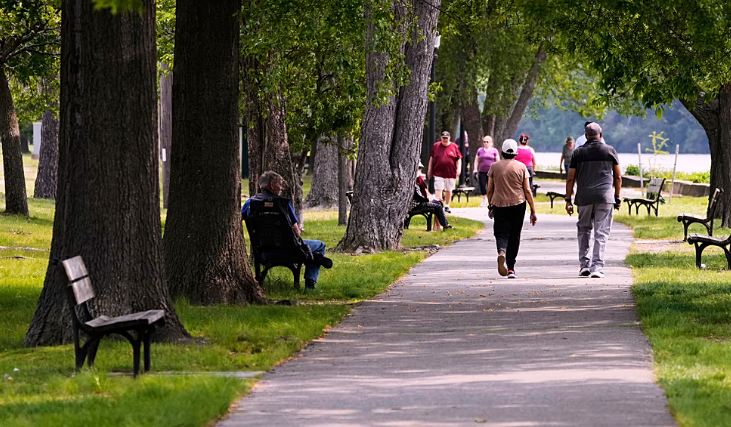
Even minor adjustments to daily routines, such as five extra minutes of exercise, an additional five minutes of sleep, or half an hour less sitting, could help people live longer and reduce the risk of early death, according to two new studies.
Research published in The Lancet found that small, achievable increases in physical activity can prevent up to 20 percent of deaths. Walking at a moderate pace for an extra five minutes a day was associated with a 10 percent reduction in mortality among adults who are already moderately active, averaging 17 minutes of exercise per day. Doubling this to ten extra minutes daily could reduce deaths by around 15 percent.
For less active individuals, just five more minutes of moderate activity per day was linked to a six percent reduction in deaths, while ten minutes produced a nine percent reduction. Cutting an entire hour of sedentary time was associated with a 13 percent reduction in mortality among most adults. Reducing sitting by 30 minutes per day, roughly five percent of total sedentary time for the average adult, could prevent more than seven percent of deaths.
The analysis drew on data from more than 135,000 adults across cohorts in Norway, Sweden, the United States, and the UK Biobank, followed over eight years. Device-measured activity and sedentary time were used to estimate how small changes might prevent deaths. The study’s authors stressed that the research is observational and cannot prove a direct cause-and-effect link.
“The really promising finding from this study is that just an extra five minutes per day of moderate to vigorous physical activity can help. This should be feasible for most people, even those who only do very small amounts of physical activity already,” said Daniel Bailey, reader at Brunel University of London, who was not involved in the research. He noted that moderate activity includes daily tasks such as brisk walking, housework, or gardening that raise the heart rate and warmth of the body.
Data from the latest Eurobarometer survey indicates that around 45 percent of Europeans never exercise or play sports. Nearly four in ten engage in physical activity for recreation or non-sport reasons, including dancing, gardening, or cycling. About 13 percent had not walked for at least ten minutes in the week before the survey.
A second study, published in eClinicalMedicine, found that small improvements in sleep and diet could also extend life. Among individuals with poor sleep, diet, and activity levels, adding five minutes of sleep and half a serving of vegetables per day could add roughly one year of life. The study, using data from nearly 60,000 UK Biobank participants, suggested that seven to eight hours of sleep daily, more than 40 minutes of moderate-to-vigorous exercise, and a healthy diet could provide more than nine extra years of life and good health compared with those with the least healthy habits.
Together, these studies highlight how modest changes in everyday routines can have measurable impacts on longevity and wellbeing.