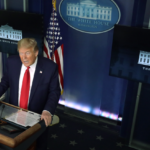


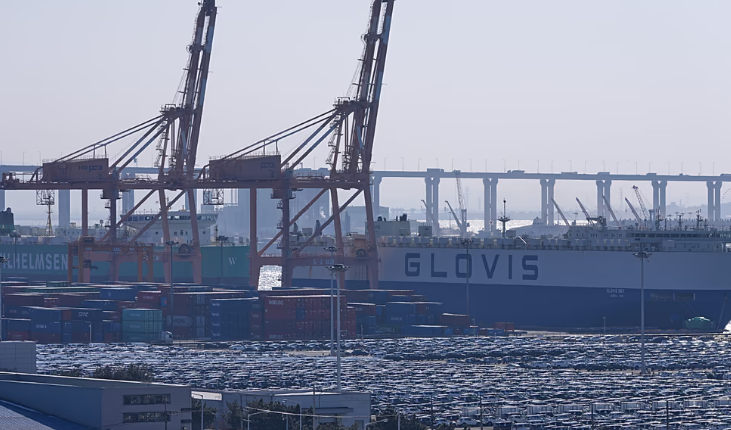
US President Donald Trump announced Monday that tariffs on South Korean exports would increase from 15% to 25%, citing delays in the approval of a trade framework agreed upon last year. The president said the hike would affect automobiles, lumber, pharmaceutical products, and “all other reciprocal tariffs.”
“Our trade deals are very important to America. In each of these deals, we have acted swiftly to reduce our tariffs in line with the transaction agreed to. We, of course, expect our trading partners to do the same,” Trump said in a social media post.
The original tariffs were imposed under an economic emergency declaration, bypassing Congress. South Korea, however, must secure legislative approval for the trade framework that was announced in July and reaffirmed during Trump’s visit to the country in October.
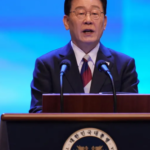
South Korea’s presidential office responded Tuesday, emphasizing its commitment to the deal. Industry Minister Kim Jung-Kwan will travel to the US for discussions with Secretary of Commerce Howard Lutnick, while Trade Minister Yeo Han-koo will meet separately with Trade Representative Jamieson Greer. Kim was visiting Canada at the time of the announcement.
The 2025 trade framework included a pledge by South Korea to invest $350 billion (€295 billion) in the US economy over several years, with a focus on revitalizing American shipyards. To implement the investment plan, South Korean lawmakers submitted five bills to the National Assembly, which are currently under review by the finance committee. A spokesperson for South Korea’s Democratic Party said the bills are expected to be combined into a single proposed law before approval by finance and judiciary committees and a full assembly vote.
Despite the investment pledge, US–South Korea relations have faced tensions in the past year. A raid by US immigration authorities at a Hyundai facility in Georgia last year led to the detention of 475 South Korean workers for more than a week, requiring urgent government negotiations for their release.
Trump’s new tariff warning signals that similar measures could be used as leverage throughout the year. Last week, he threatened tariffs on eight European countries over Greenland negotiations, later retracting the ultimatum after talks at the World Economic Forum in Davos. He also announced a potential 100% tax on Canadian goods tied to its trade with China.
While Trump has touted his trade frameworks as attracting new investment to the United States, many of his agreements remain pending. The European Parliament has yet to approve a US-proposed trade deal that would impose a 15% tax on most EU exports. The United States is also preparing to renegotiate its amended 2020 trade pact with Canada and Mexico.
Additional scrutiny continues under Section 232 of the 1962 Trade Expansion Act, and the Supreme Court is expected to rule on whether Trump exceeded his authority when imposing tariffs under the 1977 International Emergency Economic Powers Act.
The announcement underscores the continued role of tariffs as a central tool in Trump’s trade strategy, using economic pressure to enforce commitments and advance investment goals in the United States.