Venezuela’s recent access to U.S. dollars from oil sales does not address the country’s deep economic problems, economist Ricardo Hausmann said, warning that relief is only temporary under a “hyper-repressive” regime. Hausmann, director of Harvard University’s Growth Lab and former Venezuelan Minister of Planning, described the U.S. strategy as a form of cash-flow control rather than a solution to long-term issues.
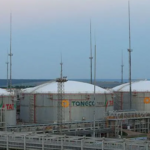
“The current arrangement is as follows: Venezuela is forbidden to sell its oil directly, but can deliver it to the United States. Washington sells it at market price and deposits the proceeds into accounts under its control. It then transfers those dollars to the Venezuelan government with conditions,” Hausmann explained. While this mechanism allows the government access to more dollars, restrictions on their use mean the effect is largely temporary. “It’s like taking an aspirin: it relieves symptoms but doesn’t cure the patient,” he said.
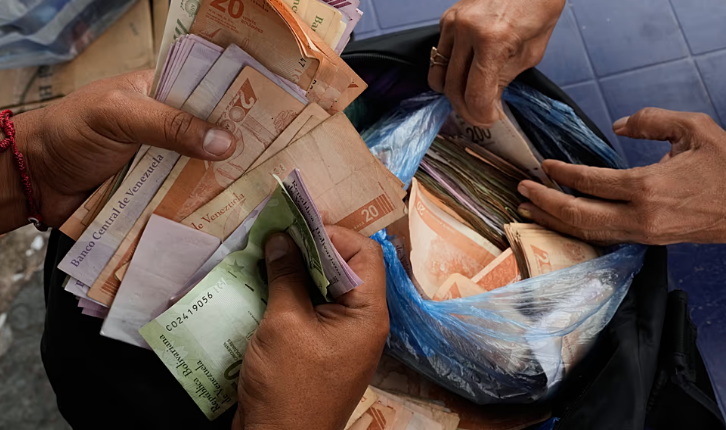
Hausmann highlighted the phenomenon of “de facto dollarisation” in Venezuela, where hyperinflation and the bolívar’s sharp devaluation have made dollars the dominant currency for daily transactions. “Nobody wants to save in bolívars, so it disappeared as a savings currency,” he said. Unlike officially dollarized countries, Venezuela’s financial system cannot offer credit or savings in dollars, limiting the impact of currency inflows on economic recovery.
Even with increased dollar liquidity, living standards remain depressed. Salaries and pensions are paid in bolívars, while prices are increasingly denominated in dollars, eroding purchasing power. Hausmann cited retirees earning the equivalent of just three dollars a month. High costs, combined with low incomes, make Venezuela one of the most expensive countries in the region relative to local earnings, he added.
Remittances have become a critical lifeline for families, with more than eight million Venezuelans living abroad sending money home. The scale of emigration reflects both the humanitarian crisis and the country’s fragile economy.
Hausmann stressed that the true path to recovery lies not in temporary dollar inflows but in restoring fundamental rights and establishing a legitimate political system. “Now it will have a somewhat better cash flow than it had before. That’s the aspirin. But that doesn’t cure the patient. You have to give Venezuelans back their rights,” he said. Without freedom, he argued, property rights and legal protections are absent, creating extreme risk for investment and production.
Restoring rights, Hausmann said, would allow Venezuelans to rebuild productive capacity, invest, and create sustainable growth. Monetary injections alone will not suffice; the country’s infrastructure, including electricity, water, transportation, and production facilities, must also be repaired. “It’s not just a matter of decreeing a salary increase… what we need is the restoration of productive capacity,” he concluded.