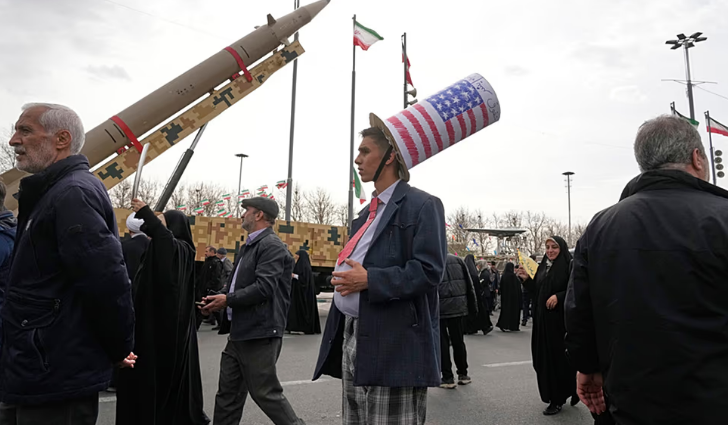
Iranian President Masoud Pezeshkian said on Wednesday that Tehran is ready for “any verification” of its nuclear programme, stressing that the country is not pursuing atomic weapons. The statement came during a speech at Azadi Square in Tehran marking the 47th anniversary of Iran’s Islamic Revolution.
“We are not seeking to acquire nuclear weapons. We have stated this repeatedly and are ready for any verification,” Pezeshkian said. He added that Iran would not yield to what he described as excessive international demands, coming as the country resumes indirect talks with the United States over its nuclear programme.
The anniversary unfolded amid heightened tensions with Washington. US President Donald Trump suggested sending another aircraft carrier group to the Middle East, while Israeli Prime Minister Benjamin Netanyahu is scheduled to visit Washington to advocate for stringent conditions in any potential nuclear agreement with Tehran. Last June, the US carried out airstrikes on Iranian nuclear sites during a 12-day conflict involving Israel.
Access for the International Atomic Energy Agency (IAEA) to Iran’s near weapons-grade uranium stockpile remains suspended. The agency has not verified the stockpile since the June conflict, when Tehran halted cooperation. In September 2025, IAEA chief Rafael Grossi reached an agreement with Iranian Foreign Minister Abbas Araghchi to resume inspections, but newly reimposed UN sanctions prompted Iran to stop implementing the deal. A fresh round of indirect nuclear talks between the US and Iran concluded last Friday in Muscat, Oman, which served as mediator. Pezeshkian described the discussions as “a step forward” and cited Iran’s rights under the Non-Proliferation Treaty.
The anniversary also came against the backdrop of ongoing domestic unrest. Nationwide protests erupted in late December 2025 over a currency collapse and hyperinflation but quickly expanded into anti-regime demonstrations. Tehran’s security forces violently suppressed the protests, and human rights organisations estimate that between 6,000 and 30,000 people may have been killed, while tens of thousands have been detained.
Despite the crackdown, state television broadcast scenes of public celebrations, with participants waving images of Supreme Leader Ayatollah Ali Khamenei and the founder of the Islamic Republic, Ayatollah Ruhollah Khomeini, alongside Iranian and Palestinian flags. Some demonstrators chanted slogans supporting the government, while others voiced opposition, shouting “Death to the dictator” from their homes.
Senior Iranian security official Ali Larijani travelled from Oman to Qatar on Wednesday, highlighting the regional diplomatic engagement amid heightened tensions. Observers note that the country faces both domestic pressures and complex international negotiations, with Pezeshkian insisting Iran remains committed to its stated nuclear goals.