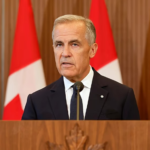



Belgium’s Constitutional Court has suspended key asylum and migration rules recently introduced by the government, dealing a setback to Prime Minister Bart De Wever’s push for the country’s “strictest migration policy yet.” The rulings, issued on Thursday, specifically target family reunification measures and reception rules for asylum seekers.
The first suspension concerns rules introduced in August 2025 that imposed a two-year waiting period for beneficiaries of subsidiary protection—people facing a real risk of “serious harm” if returned to their home country. Two families affected by the law appealed to the Constitutional Court, arguing that it made family reunification nearly impossible and had serious consequences for children.
The court has referred five questions to the European Court of Justice to clarify how European law should apply before issuing a final ruling. Until then, the rules on family reunification remain suspended. One of the applicants, a Yemeni man known as Mr M.S., welcomed the decision. The law had prevented his wife and one-year-old child from joining him in Belgium. “I hope I can finally hold him in my arms. Every day I am afraid that something will happen to them,” he said.
Migration Minister Anneleen Van Bossuyt said the ruling affects only cases of subsidiary protection. “This represents a very small fraction of all cases. For other groups, the rules relating to family reunification remain in place, including higher income thresholds and waiting times,” she said.
The second suspension targets measures relating to the reception of asylum seekers, introduced in July 2025. Under these rules, individuals who already hold protection in another EU country could be denied accommodation by Belgium’s asylum agency, Fedasil. Critics argued that the policy left families with minor children sleeping on the streets while their applications were processed.
The court ruled that refusing shelter to applicants who already hold asylum in another EU country is “likely to cause serious harm that would be difficult to repair.” It referred questions to the European Court of Justice to determine whether EU law allows Belgium to deny material assistance in these cases. The suspension also covers the abolition of financial assistance for asylum seekers, which could disproportionately affect those who cannot access reception facilities due to Fedasil’s capacity limits.
Van Bossuyt said the suspension does not indicate a broader crisis. “Due to the current decline in inflow figures, we can accommodate everyone entitled to it,” she said, adding that amendments would address the court’s concerns.
Human rights lawyers described the rulings as a reprimand of the government’s tougher migration stance. Marie Doutrepont, representing asylum seekers, said: “This sends a strong signal that the Belgian government cannot ignore fundamental rights, including the right to family life and a dignified existence.”
The rulings come as Belgium prepares to implement the EU Migration and Asylum Pact, adopted in May 2024, which introduces stronger border controls, faster asylum procedures, and a mandatory solidarity mechanism among member states. De Wever’s government has insisted that its policies align with EU law and expects the new pact will support its stricter approach.