European countries have refused US President Donald Trump’s request to participate in a naval mission aimed at reopening the Strait of Hormuz, seeking to avoid direct involvement in the Middle East conflict.
EU foreign policy chief Kaja Kallas said on Monday that there was “no appetite” among EU foreign ministers to extend the mandate of the bloc’s naval mission Aspides into the strategic waterway. Trump had urged European nations to secure the strait in an effort to stabilise global energy prices.
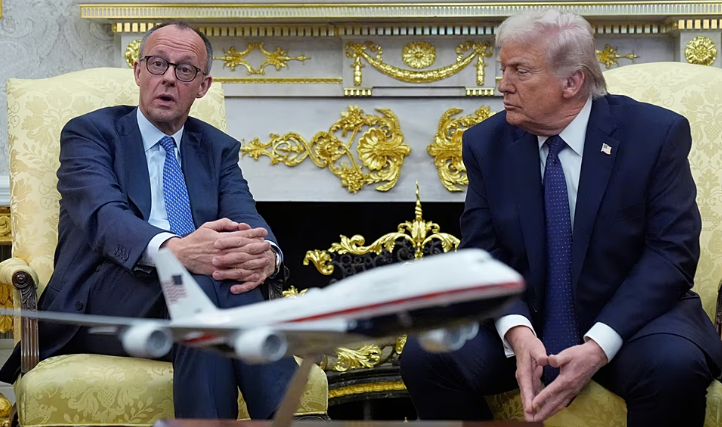
“Nobody wants to go actively in this war,” Kallas said after a ministerial gathering in Brussels. German Chancellor Friedrich Merz echoed the sentiment, stating that Germany will “not participate in the war” and that the conflict is “nothing to do with NATO.” Trump later warned that NATO could face repercussions if allies refused to support US-led efforts.
Finland also signalled resistance, with Foreign Minister Elena Valtonen telling Euronews that NATO is a defensive alliance focused on European and North Atlantic security and will not be “dragged into a war of choice.” UK Prime Minister Keir Starmer issued a similar message, emphasizing that the UK will not engage in a wider conflict.
Trump’s appeals have met resistance beyond Europe. Asian countries have also expressed reluctance, prompting Trump to consider delaying a planned meeting with Chinese President Xi Jinping.
Meanwhile, Ukraine continues to push for EU membership despite obstacles. Deputy Prime Minister for European Integration Taras Kachka is set to meet EU enlargement chief Marta Kos in Brussels to discuss an accelerated accession path. Kachka said Ukraine is not demanding early membership but hopes to shorten the process so that signing an accession treaty could be possible by 2027. EU diplomats, however, have expressed doubts about Kyiv meeting the necessary criteria within this timeframe.
European Commissioner for the Mediterranean Dubravka Šuica addressed criticism over her attendance at Trump’s Board of Peace in February, weeks before the US and Israel launched airstrikes against Iran. Šuica clarified that the EU had not legitimised the initiative, saying she attended only as a representative of President Ursula von der Leyen and that the EU is not a member of the Board. She stressed the need to remain focused on Gaza, which was the Board’s original purpose.
In Germany, Chancellor Merz has confronted a growing row over cooperation between centre-right and far-right lawmakers in the European Parliament. An investigation revealed that European People’s Party (EPP) members coordinated with Alternative for Germany (AfD) on migration legislation through a private messaging group. Merz warned that such collaboration must end, placing responsibility on EPP chair Manfred Weber. AfD MEP Tomasz Froelich acknowledged some technical cooperation, dismissing concerns about the traditional firewall between centrist and far-right groups.
The situation in the Strait of Hormuz continues to affect Europe’s energy security and food supply, with disruptions to shipping threatening industrial operations and fertiliser exports. EU ministers and policymakers remain engaged, with upcoming meetings on foreign interference, environmental issues, and regional security planned in Brussels.
European Commission and Parliament leaders, including Roberta Metsola and Kaja Kallas, are closely monitoring both the Middle East crisis and Ukraine’s EU ambitions, highlighting the complex interplay between security, diplomacy, and economic stability for the continent.