

Global fuel markets faced renewed pressure on Monday as uncertainty over the Strait of Hormuz disrupted expectations of easing energy prices, just as US officials travelled to Pakistan for a new round of talks with Iran.
The delegation, including special envoy Steve Witkoff and senior adviser Jared Kushner, is set to meet Iranian counterparts in Islamabad following an earlier round of negotiations that ended without agreement. The renewed diplomacy comes after shifting signals over the weekend again clouded the outlook for global oil flows.
Crude prices, which had briefly fallen after reports that the key shipping route might reopen, reversed course as tensions resurfaced. Brent crude climbed about 9.5 percent to roughly $94.30 a barrel, while US benchmark crude rose 10 percent from last week’s lows to around $87 a barrel.
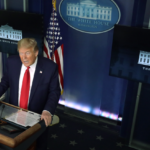
The volatility followed a rapid sequence of developments. On Friday, Iran’s foreign minister Abbas Araghchi said the Strait would remain “completely open” during the ceasefire period, a statement echoed by US President Donald Trump, who declared the waterway “fully open and ready for business.” Markets initially reacted positively, with oil prices dropping more than 10 percent.
That optimism faded within 24 hours. Reports of renewed disruptions and attacks on vessels passing through the Strait led several ships to turn back, raising fresh concerns about the safety of maritime traffic. Iranian officials also issued conflicting signals over control of maritime policy, with suggestions that internal coordination over the Strait remains unsettled.
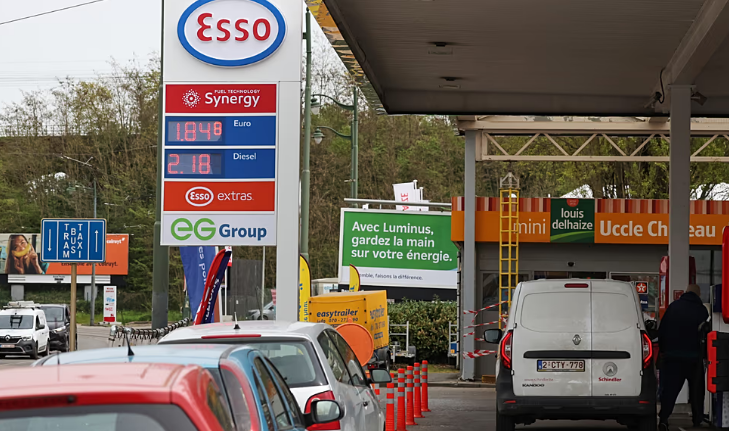
The uncertainty has already filtered into consumer markets. The latest data from the European Commission showed average petrol prices in the EU at €1.853 per litre and diesel at €2.099 per litre, figures recorded before the latest escalation. Analysts expect those prices to rise again in the coming days if crude oil remains elevated.
In the United Kingdom, Edmund King warned that a brief drop in fuel prices is unlikely to last, describing it as a “false dawn” driven by fragile market sentiment. He added that sustained instability in the Middle East would likely push pump prices higher again.
Concerns are also mounting over aviation fuel supplies. Fatih Birol recently warned that Europe may have only about six weeks of jet fuel reserves, underscoring the broader vulnerability of energy supply chains.
Despite the turbulence, diplomatic efforts continue. White House officials confirmed that negotiations in Pakistan are aimed at securing a broader agreement after earlier talks failed to produce results. US Vice President JD Vance was originally expected to join the delegation but withdrew due to security concerns.
The situation in the Strait of Hormuz remains central to both markets and diplomacy, with nearly one-fifth of global oil shipments passing through the narrow waterway. Investors and policymakers are now watching closely for signs of stability, as each shift in rhetoric continues to ripple through global energy prices.