


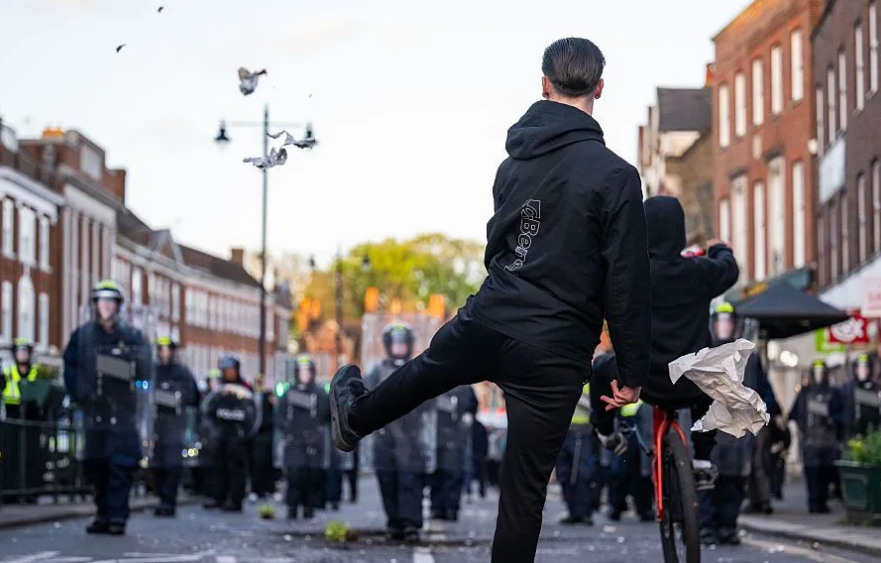
A normally quiet Surrey suburb has been shaken by days of unrest triggered by a false allegation of rape that spread rapidly online before being debunked by police.
Epsom became the focus of protests, vandalism and public disorder after claims circulated on social media suggesting a serious sexual assault had taken place in the area and that asylum seekers or migrants may have been involved. Demonstrators gathered on multiple occasions, demanding answers from Surrey Police, with some entering a local hotel under the mistaken belief it was housing migrants.
Police have since confirmed that the alleged rape did not occur. Following a detailed investigation, Surrey Police said the woman who initially reported the incident had likely sustained an accidental head injury after a night out and had made what officers described as a “confused report.” She had given permission for this clarification to be made public.
The force said it treats all reports of sexual offences with seriousness but noted that early information was limited. An initial public appeal issued on 12 April described an alleged attack on a woman in her twenties returning from a nightclub, but provided no detailed suspect description.
That lack of detail quickly filled an online vacuum. False claims began circulating on social media platforms, with some accounts alleging that migrants or asylum seekers were responsible. The narrative escalated as influential online profiles amplified speculation, including unverified claims of police cover-ups.
Experts have linked the rapid spread of misinformation to algorithm-driven content promotion. Professor Sander van der Linden of the University of Cambridge described such dynamics as “stochastic terrorism,” where online misinformation can translate into real-world violence.
Protests followed within days of the police appeal. While some attendees were local residents seeking clarity, others travelled from outside the area. Online clips of the gatherings spread widely, with some posts reaching hundreds of thousands of views and amplifying claims of anger and distrust.
Despite Surrey Police later confirming there was no evidence of rape or migrant involvement, tensions continued. A second wave of protests saw groups entering a hotel that did not house asylum seekers. Riot police were deployed after reports of disorder, and five individuals aged between 15 and 23 were arrested on suspicion of public order offences and criminal damage.
Authorities say the situation highlights how quickly misinformation can escalate when official details are limited. Police and Crime Commissioner Lisa Townsend said there are lessons to be learned but defended the decision not to release speculative details during the investigation.
“Legitimate concerns were exploited by those pushing a more sinister narrative,” she said, warning against premature judgments based on incomplete information.
The episode has reignited debate over the role of social media algorithms in amplifying unverified claims. Analysts say content driven by outrage is often prioritised online, accelerating the spread of false narratives before facts are confirmed.
Surrey Police has now closed its investigation, but officials acknowledge that the incident has left lasting questions about how public trust, policing communication and online misinformation intersect in fast-moving cases.