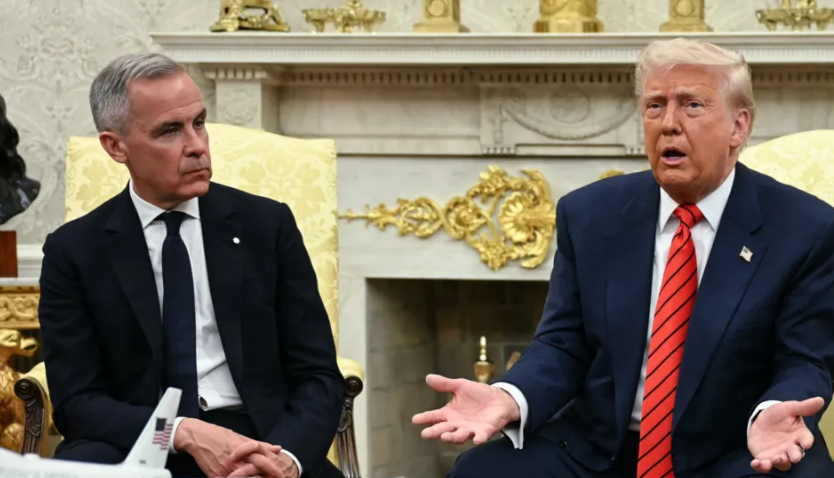
Canada has scrapped its planned digital services tax on large US technology companies following pressure from President Donald Trump, prompting the resumption of stalled trade negotiations between the two countries.
The move came after a phone call between Canadian Prime Minister Mark Carney and President Trump on Sunday evening, during which Carney agreed to abandon the levy. The White House hailed the decision as a victory for American tech firms and workers, calling the tax “a blatant attack.”
Speaking to reporters in Ottawa on Monday, Carney confirmed the tax had been dropped “as part of a bigger negotiation,” while Canadian Finance Minister François-Philippe Champagne said the decision reflected Canada’s longstanding preference for a multilateral approach to digital taxation.
The now-rescinded tax, first announced in 2020, would have imposed a 3% charge on the Canadian revenue of major US firms like Amazon, Meta, Google and Apple. It was expected to raise C$2 billion in its first year, as it applied retroactively to January 2022, and C$5.9 billion over five years, according to Canada’s most recent federal budget.
White House Press Secretary Karoline Leavitt said Canada had “made a mistake” and praised Trump’s role in reversing the policy. “President Trump knows how to negotiate,” she said. “Every country on the planet needs to have a good relationship with the US. This is a big victory for our tech companies and our workers.”
Trade talks had been suspended last week after Trump threatened to impose tariffs in response to the tax. On Monday, White House economic adviser Kevin Hassett confirmed discussions between the US and Canada had resumed.
In Canada, the decision triggered backlash from the opposition. Conservative leader Pierre Poilievre accused Carney of backing down at the “11th hour,” referencing the “elbows up” campaign slogan Carney’s Liberal Party used to position itself as tough on US trade. Poilievre called on the prime minister to secure concessions from the US, particularly the removal of tariffs on Canadian softwood lumber.
Meanwhile, US Commerce Secretary Howard Lutnick welcomed Canada’s reversal, writing on X that the tax had been “intended to stifle American innovation and would have been a deal-breaker for any trade deal with America.”
Canada is one of several countries, including the UK and France, that have proposed or implemented digital taxes in recent years, citing concerns that tech giants generate significant revenue from local markets while paying minimal tax due to how their businesses are structured globally.