

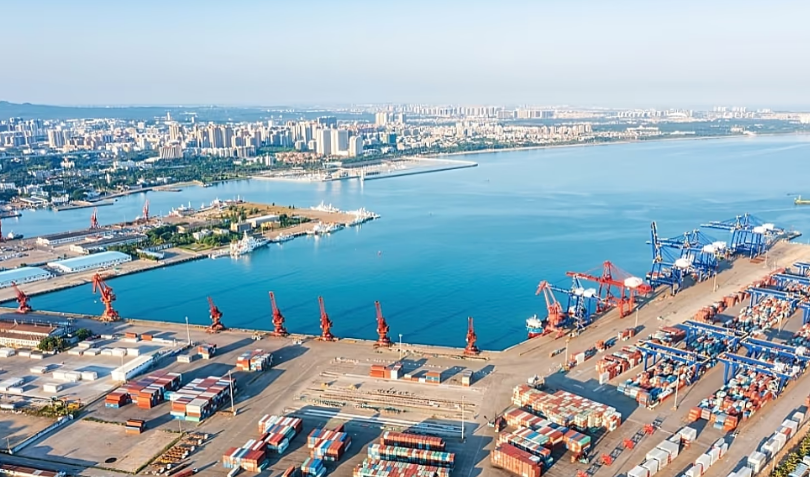
China has officially transformed the island province of Hainan into a free trade port, one of the government’s most ambitious economic experiments to date. New laws, effective from December 2025, make Hainan a separate customs zone with a regulatory framework designed to attract international business and investment.
The move comes as many countries around the world adopt protectionist trade policies. By contrast, China is expanding access to international markets, offering incentives that could position Hainan as a global hub for commerce, tourism, and innovation.
Hainan, the country’s southernmost province, covers more than 35,000 square kilometers, making it roughly fifty times larger than Singapore and slightly bigger than Belgium. The Chinese Communist Party has described the initiative as a way to address uncertainties in the global economy while replicating Singapore’s success as a small but highly competitive trade hub.
According to state-run Xinhua news agency, the “special customs operations” signal a fundamental restructuring of Hainan’s relationship with international markets. The province now operates under a “two-line” customs system. The first line removes most trade barriers, allowing goods to enter Hainan freely, including raw materials, equipment, and consumer products. The second line maintains standard customs rules for goods moving between Hainan and mainland China. However, products that achieve at least 30% added value within the province can enter the mainland duty-free, encouraging production and processing on the islands rather than simply serving as a transit hub.
Hainan also offers a flat corporate tax rate of 15%, lower than rates in Hong Kong (16.5%), Singapore (17%), and mainland China (25%). The province has created a separate regulatory framework for industries such as pharmaceuticals and medical devices, allowing products approved abroad to be used in Hainan even if they are banned elsewhere in China. Companies registered on the island can also access broader internet connectivity, bypassing the mainland’s strict online controls, while foreign universities can establish campuses without a local partner.
Visa-free entry has been extended to 86 countries, including the United States, Germany, and Australia, with stays of up to 30 days for business, medical treatment, or tourism. Foreign banks can open accounts with capital flows exempt from mainland foreign-exchange restrictions.
Hainan’s transformation is part of a long-term strategy to turn the province into a major economic hub by 2035 and a global influence by the middle of the century. Special economic zones have been used in China since the late 1970s to test market-driven policies while maintaining state oversight, and Hainan represents the largest-scale application of this approach.
With low taxes, zero tariffs, and broad international access, Hainan is being positioned as China’s gateway to Asia-Pacific markets. Analysts say the initiative offers a “pressure valve” amid rising global economic tensions, combining strategic trade policies with incentives for foreign investment, tourism, and innovation.