Spending at European holiday markets has risen sharply in recent years, with Visa reporting an average increase of 15% per year since 2022. The trend is expected to continue through the end of the 2025 festive season, highlighting the growing economic impact of these seasonal attractions.
Millions of visitors flock to markets across Europe each winter, drawn by festive decorations, wooden chalets, mulled wine, and seasonal treats. Attractions such as Ferris wheels and the Starflyer ride add to the appeal, creating a mix of shopping, entertainment, and socialising. For many cities, these markets are an important driver of tourism and local business revenue during the crucial holiday period.
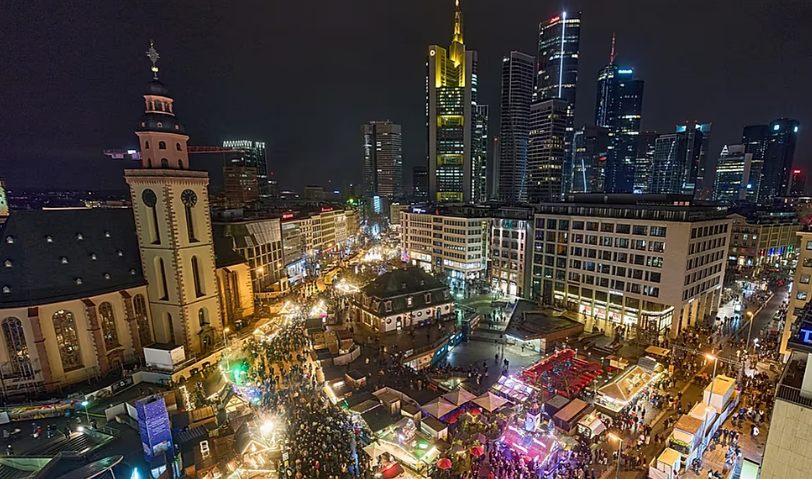
According to Visa’s analysis of 20 markets across 14 countries, spending growth has been particularly strong in Germany. Frankfurt recorded a 45% increase in holiday market expenditure, while Cologne saw a 35% rise. Strasbourg and Krakow followed with 30% and 25% growth respectively. Other cities such as Munich, Budapest, and Copenhagen also saw robust gains of around 20%, with Lille, Nuremberg, and Basel completing the top ten in spending growth.
“Our data shows that these events increasingly drive significant cross-border spending and support local businesses during a critical period,” said Claudio di Nella, head of Visa consulting and analytics Europe. He noted that digital payments have played a key role, providing visitors with secure and convenient ways to shop, whether locally or across borders. “As consumers seek authentic, memorable experiences wherever they are, markets across Europe are seeing record engagement, and we expect this trend to continue this year and beyond,” di Nella added.
Visa’s data also highlights the markets that attract the most visitors. Prague, Krakow, and Budapest were among the busiest, with tens of thousands of attendees each day throughout November and December. International visitors contributed strongly to growth, with Strasbourg reporting a year-on-year increase of over 45%, Lille nearly 40%, and Frankfurt close to 35%.
The festive period also generates seasonal employment opportunities. In the UK, hiring platform Indeed recorded the highest number of Christmas market and seasonal job searches in early October 2025 since records began in 2018. Seasonal roles, which typically make up less than 0.3% of all job postings, often rise above 1% in the run-up to Christmas. Similar increases in temporary employment were noted across other European countries hosting holiday markets.
Visa’s analysis covered markets in Basel, Bratislava, Bruges, Brussels, Budapest, Cologne, Copenhagen, Edinburgh, Gothenburg, Frankfurt, Krakow, Lille, Munich, Nuremberg, Prague, Riga, Stockholm, Strasbourg, Tallinn, and Vienna, illustrating the widespread growth of festive consumer activity across the continent.
The strong increase in spending, combined with the boost to tourism and seasonal jobs, underscores the growing importance of holiday markets to European cities’ economies, offering both cultural charm and economic benefit.