

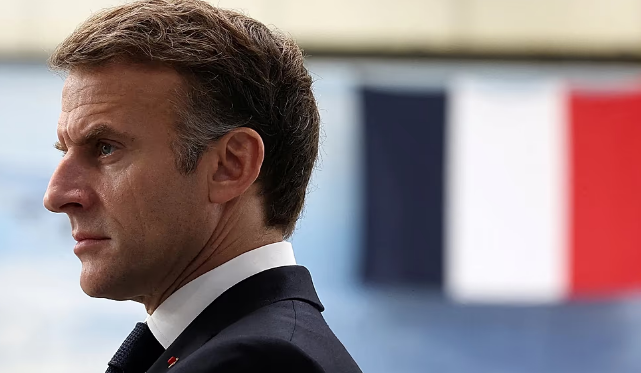
France is preparing to establish strategic reserves of rare earth elements and critical metals as President Emmanuel Macron seeks to reduce the country’s dependence on foreign suppliers and protect key industries against potential disruptions to global supply chains.
The initiative targets three major sectors: defence, automotive manufacturing and aerospace. It comes amid growing international tensions, trade restrictions and concerns about access to essential industrial materials.
The plan was presented earlier this week during a meeting at the Élysée Palace titled “Protect France”, attended by around 15 industry executives. According to details seen by Euronews, the government has assigned responsibility for developing the strategic reserves and coordinating joint purchasing arrangements to the Caisse des Dépôts, the French state’s financial institution.
Companies will also be expected to diversify their sources of raw materials. Businesses that fail to meet these requirements could face reductions in public financial support. The government is also considering price-guarantee mechanisms designed to give producers greater certainty when making investment decisions.
However, important details remain unresolved, including which minerals should receive priority, how much should be stored and which companies will be eligible to access the reserves.
Frédéric Jeannin, a researcher at the IRIS think tank and co-head of its Energy and Raw Materials programme, told Euronews that the government must first identify the materials considered strategically important and determine which industries require protection.
He said France could establish both physical stockpiles and reserves based on purchasing commitments. The system would provide protection against sudden market disruptions and security-related emergencies.
A major concern is China’s dominant position in the global critical minerals supply chain, particularly its extensive refining capacity. Beijing has increasingly used export licensing arrangements to control shipments of certain materials, allowing authorities to assess individual transactions according to their intended use and recipients.
Jeannin warned that these controls could expose European manufacturers to sudden supply restrictions and higher prices. He described strategic reserves as a safety buffer that could help France withstand decisions affecting access to essential materials.
He also raised concerns about the information Chinese authorities can obtain from companies importing materials, including details about processing activities and industrial supply chains.
“We wonder whether China has a better picture of our industry than we do,” he said.
The proposed reserves are also intended to prepare France for a possible military confrontation involving Russia. Jeannin argued that maintaining supplies of raw materials and components on French territory would help ensure that defence manufacturers could continue operating during a prolonged crisis.
He said the ability to maintain production during an emergency would also send a message to potential adversaries that France could withstand supply disruptions for a certain period.
The United States offers a potential model. Washington announced its $12 billion Project Vault strategic minerals reserve in February, designed to cover approximately two months of domestic consumption.
The Élysée said the French initiative had already generated nearly €7 billion in investment. Jeannin described this as a positive beginning but stressed that the government must clarify how the money will be allocated.
He acknowledged that building more resilient supply chains would increase costs for businesses and consumers, but argued that the additional expense was necessary to protect French industry against future crises.