


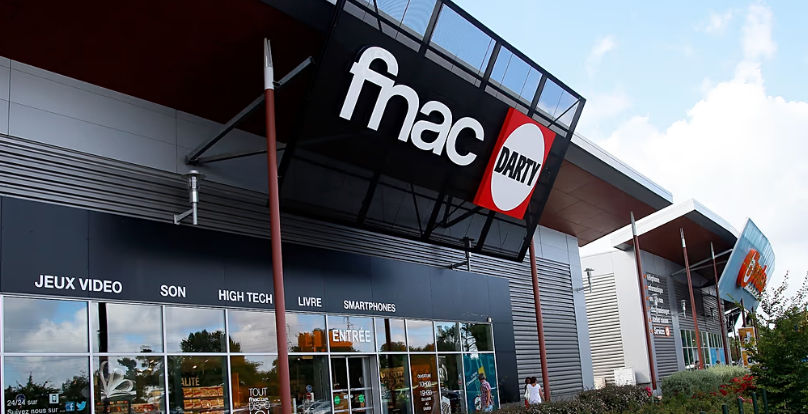
Chinese e-commerce giant JD.com’s interest in French retailer Fnac Darty has reignited concerns within the French government about Beijing’s expanding influence in Europe, particularly in areas linked to data security, cultural autonomy and long-term strategic control.
After Shein, Temu and Alibaba, JD.com is the latest major Chinese retailer seeking a stronger foothold in France. The company recently acquired a stake in Fnac Darty and, in late October, launched its JoyBuy shopping platform across France and several other European markets. The move positions JD.com to challenge not only Chinese rivals but also Amazon, which remains the dominant online marketplace in Europe. Chinese e-commerce giant JD.com’s decision to take a stake in French retailer Fnac Darty has revived French government concerns about China’s growing influence in Europe, particularly around data security, cultural independence and long-term strategic leverage.
Founded in 1998 by Liu Qiangdong, known internationally as Richard Liu, JD.com has grown from a small Beijing shop into one of China’s largest online retailers. The company generated nearly $160 billion in sales in 2024 and ranks as China’s third-largest e-commerce group, behind Alibaba and Temu parent PDD Holdings.
The future ownership of Fnac Darty remains complex. Czech billionaire Daniel Křetínský, through Vesa Equity Investment, is currently the retailer’s largest shareholder with 28.3%. His stake gives him strong influence over whether the company remains under European control. He may increase his holding or opt to sell part of it if JD.com seeks a larger role. The second-largest shareholder is Germany’s Ceconomy AG, which owns roughly 22%. The rest is held by investment funds, employees, smaller shareholders and the market.
JD.com is also in the process of completing a €2.2 billion takeover of Ceconomy. If approved by German authorities, the deal would indirectly give the Chinese group access to Ceconomy’s stake in Fnac Darty, strengthening its presence in the European retail landscape.
Fnac Darty, known for books, electronics and home appliances, operates mainly in France along with stores in Spain, Portugal, Belgium, Switzerland, Luxembourg and several countries in Africa and the Middle East.
The French Ministry of the Economy is now carefully examining JD.com’s plans. Paris applies strict screening to all foreign investments, with even closer attention to deals involving Chinese firms. Officials are analysing not only economic implications but also potential risks to cultural sovereignty, an area increasingly treated as a strategic sector. JD.com executives have held discussions with the Ministry and have offered assurances that they intend to follow French regulations.
A central concern is data access. Under China’s National Intelligence Law, Chinese companies can be required to share information with state authorities. This has raised fears in Paris that customer data from Fnac Darty — covering the habits of nearly two million consumers — could be vulnerable.
JD.com has formally requested an investment review, and Bercy now has up to three months to rule. The case underscores a broader debate across Europe: how to manage China’s expanding commercial reach without compromising control over sectors viewed as strategically vital.