
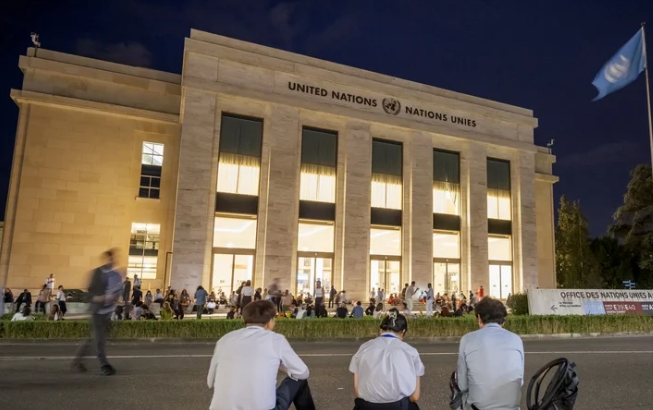
Negotiations to finalise a landmark global treaty aimed at tackling plastic pollution stretched through the night in Geneva, as countries debated a last-minute revised proposal issued after the talks’ original deadline passed.
The new draft, released by talks chair Luis Vayas Valdivieso of Ecuador, contains more than 100 unresolved sections but was described by some delegates as an “acceptable basis for negotiation.” The text emerged after his earlier version, issued Wednesday, was sharply criticised by nations across the spectrum, threatening to derail three years of work.
Two major blocs remain divided. The High Ambition Coalition – which includes the European Union, Britain, Canada, and many African and Latin American nations – is pushing for commitments to reduce plastic production and phase out toxic chemicals. On the other side, the Like-Minded Group – led by oil-producing states such as Saudi Arabia, Kuwait, Russia, Iran, and Malaysia – wants the treaty to focus primarily on waste management rather than curbing production.
While some negotiators welcomed the revised draft as a step toward compromise, others said it fell short. “It is far from what is needed to end plastic pollution, but it can be the springboard to get there if we sharpen it in the next round,” Panama’s chief negotiator Juan Carlos Monterrey said. A diplomat from another country called it “not too bad but not too good either,” noting little sign of movement from the Like-Minded Group.
The scale of the challenge is vast. Plastic pollution has been detected everywhere from the highest mountain peaks to the deepest ocean trenches, with microplastics found throughout the human body. According to the OECD, annual fossil-fuel-based plastic production is on track to nearly triple to 1.2 billion tonnes by 2060, while waste will exceed one billion tonnes.
French President Emmanuel Macron urged urgent action, posting on X: “What are we waiting for to act? I urge all states gathered in Geneva to adopt an agreement that truly meets the scale of this environmental and public health emergency.”
Kenya’s Environment Minister Deborah Barasa, also part of the High Ambition Coalition, stressed the need for compromise. “We need to come to a middle ground,” she said, adding that a treaty could be struck now, with some details finalised later.
However, environmental groups voiced disappointment. The International Pollutants Elimination Network (IPEN) warned that the treaty’s ambition “cannot become the new normal,” while the World Wide Fund for Nature (WWF) criticised the text as “so compromised, so inconsequential, it cannot hope to tackle the crisis in any meaningful way.”
The negotiations, involving 185 countries since 5 August, are the latest attempt in a process that has already seen five rounds of talks fail to secure an agreement. Whether the latest draft can bridge the divide between competing priorities remains uncertain.