

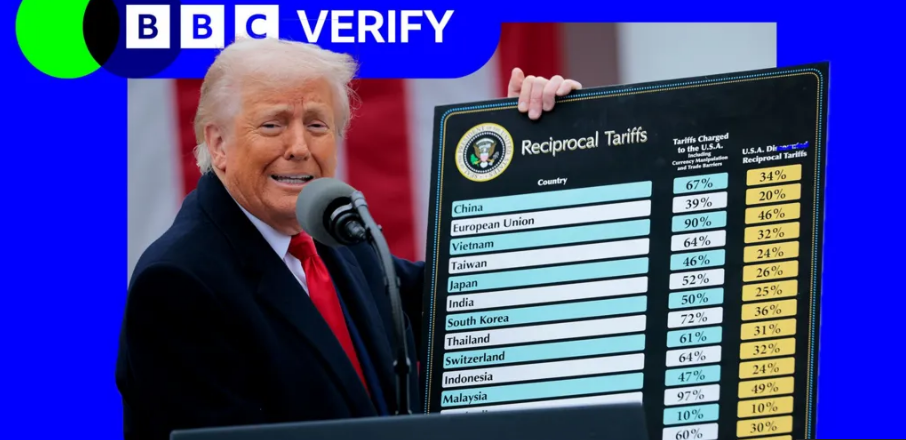
The global trading system is facing renewed turbulence after President Donald Trump implemented wide-ranging import tariffs on more than 90 countries, effective 7 August.
The new measures impose rates from 10% on UK imports to 50% on Indian goods, with Syria facing a 41% tariff. Targeted commodities, including automobiles and steel, also face additional duties. The changes lift America’s average effective tariff rate to 18.6% — the highest since 1933 — up sharply from 2.4% in 2024 before Trump returned to office.
The U.S. government’s monthly tariff revenues tripled over the past year, reaching $28 billion in June. The Congressional Budget Office (CBO) projects the higher duties could reduce federal borrowing by $2.5 trillion over the next decade. However, it also warned the tariffs will shrink economic output compared to baseline forecasts, and that revenue gains will be outweighed by losses from the administration’s tax cuts.
Despite Trump’s stated aim to reduce trade deficits, the U.S. goods gap widened early this year. Companies rushed to import goods before tariffs took effect, driving the deficit to a record $162 billion in March before easing to $86 billion in June. Economists note structural imbalances in the U.S. economy, rather than foreign trade practices, are the main driver of the persistent deficit.
China, a key target of the administration’s trade policy, saw its exports to the U.S. fall 11% in the first half of 2025 compared to the same period last year. While tariffs on Chinese goods once reached 145%, they currently stand at 30%. Chinese exporters have redirected trade flows to other markets, with shipments to India up 14%, the EU up 7%, and the UK up 8%.
The trade rift has also spurred new agreements elsewhere. The UK and India concluded a long-negotiated trade deal, while the European Free Trade Association signed an accord with the Mercosur bloc. The EU is advancing talks with Indonesia, and Canada is exploring a pact with ASEAN nations.
Agriculture has been another flashpoint. Chinese soybean imports from the U.S. dropped sharply, with just 1.6 million tons imported in June versus 10.6 million from Brazil. Retaliatory tariffs have accelerated this shift, echoing trade tensions from Trump’s first term, when U.S. farmers received federal subsidies to offset losses.
Economists warn the tariffs could soon raise costs for American consumers. Inflation edged up to 2.7% in June from 2.4% in May, with notable price increases for imported goods such as appliances, computers, and toys. Stockpiling earlier in the year softened the immediate impact, but analysts expect prices to climb further as inventories run down.