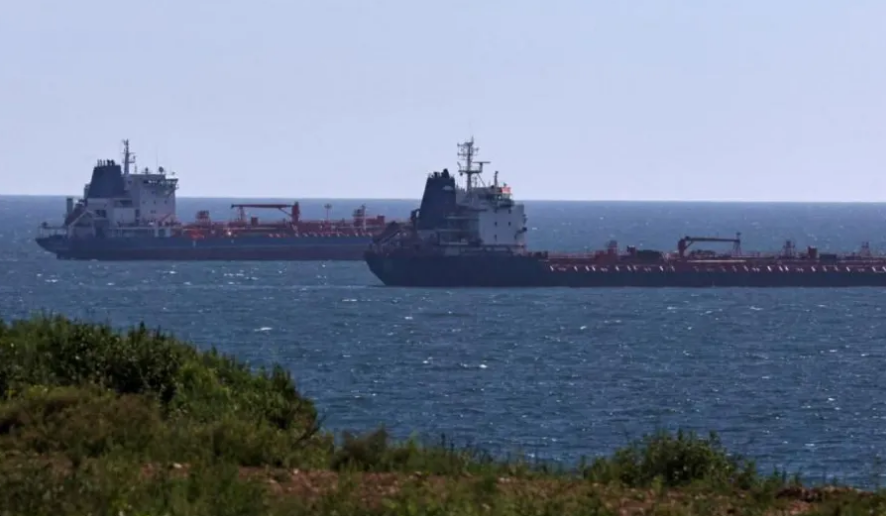
The United States has temporarily eased sanctions on the purchase of Russian oil already loaded onto vessels at sea, a move aimed at mitigating the economic fallout from the US-Israel war with Iran. Treasury Secretary Scott Bessent described the waiver as a “short-term measure” designed to promote “stability in global energy markets” without providing substantial financial gains to the Russian government. The waiver will remain in effect until 11 April and applies only to designated “permit countries.”
Russia said it currently has roughly 100 million barrels of oil in transit. The energy market has been severely disrupted by attacks on ships and infrastructure in the Gulf, along with the effective closure of the Strait of Hormuz. The narrow waterway, which normally handles around a fifth of the world’s oil shipments, has left tankers stranded and contributed to a growing global supply crisis.
Oil prices surged above $100 per barrel on Thursday as three more cargo vessels were hit in the Gulf and Iran’s new Supreme Leader vowed to maintain the blockade. Global stock markets reacted negatively to the disruptions, reflecting heightened uncertainty about energy supply.
The spike in oil prices has added to domestic economic pressures in countries such as the United States. President Donald Trump is facing criticism amid slowing growth, with figures showing the US economy expanded at an annualised rate of just 0.7 percent at the end of 2025, lower than earlier estimates. In response, Washington announced the release of 172 million barrels from its strategic petroleum reserve on Wednesday.
Russian officials welcomed the US decision, with President Vladimir Putin’s economic envoy Kirill Dmitriev saying the waiver acknowledged the necessity of Russian oil for global market stability. “Amid the growing energy crisis, further easing of restrictions on Russian energy sources appears increasingly inevitable,” he added.
The move drew criticism from Ukraine, with President Volodymyr Zelensky warning in Paris that it “could give Russia about $10 billion for the war” and “certainly does not help peace,” according to AFP. Zelensky met with French President Emmanuel Macron to discuss measures to counter Moscow’s use of sanctioned tankers and to bolster Ukraine’s defense. Macron reiterated that the Strait of Hormuz blockade does not justify easing sanctions on Russia.
German Chancellor Friedrich Merz also opposed the decision, saying that relaxing restrictions now is “wrong” and affirming Berlin’s continued support for Ukraine. The ongoing war in Ukraine, which began with Russia’s full-scale invasion in 2022, remains a central concern for European leaders, who fear the Middle East conflict could shift attention and resources away from efforts to end the fighting in Ukraine.
The temporary waiver illustrates the delicate balance between stabilizing energy markets and maintaining sanctions pressure on Russia, highlighting the complex intersection of global conflicts and economic policy.