


Colocation services are often misunderstood. They are frequently confused with cloud platforms, managed hosting, or fully outsourced infrastructure. In practice, colocation is a very different model, where the key focus is not on server management, but on providing a reliable physical environment for hosting customer-owned equipment.
As businesses grow, on-premise server facilities become expensive and difficult to scale, while public cloud does not always offer predictable costs, performance, or control. Colocation server services sit between these approaches, combining hardware ownership with the resilience and connectivity of a professional data center.
What are colocation services
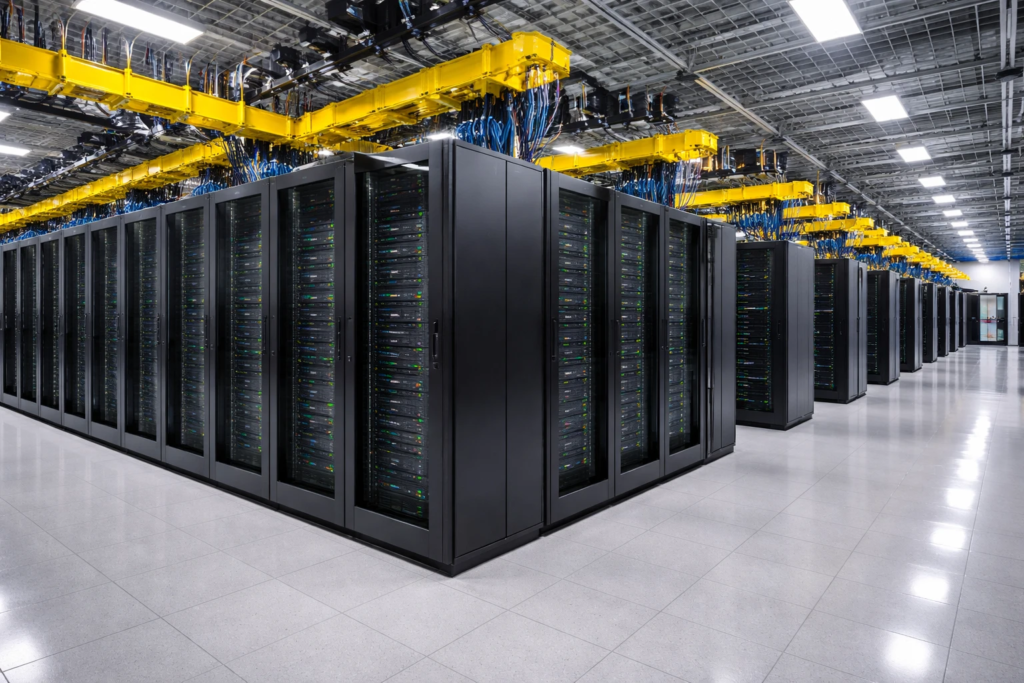
Colocation services allow companies to place their own servers, storage systems, and network equipment in a third-party data center. Instead of building and maintaining a private server room, the customer rents space, power, cooling, and network connectivity from a colocation provider.
The data center is responsible for the physical infrastructure. This includes secure facilities, power distribution systems, cooling, fire suppression, and network access. At the same time, full responsibility for the hardware, operating systems, applications, and data remains with the customer.
Unlike cloud or managed hosting, colocation does not abstract the hardware layer. Servers are not provided as virtual resources, and operating system or workload management is not part of the base model. Colocation is an infrastructure format for companies that require full control over their systems while using a professional data center environment.
This clear separation of responsibilities defines the essence of colocation services. The provider ensures a stable and fault-tolerant environment, while the customer independently decides how to use and operate the deployed infrastructure.
How colocation works in practice
In practice, colocation starts with selecting a data center and a deployment format. The company determines which equipment will be installed, what requirements apply to power, cooling, and networking, and then rents the appropriate level of resources from the provider.
At a basic level, the customer receives physical space in a rack or dedicated area, power connections with defined redundancy parameters, and access to the data center’s network infrastructure. All equipment – servers, storage systems, and network devices – belongs to the customer and is installed either independently or with the assistance of the provider’s specialists.
The deployment format depends on the scale of the infrastructure. Smaller configurations are typically placed in shared racks, where individual rack units are rented. Larger projects use dedicated racks or cages – isolated areas within the data center. For large-scale infrastructures, private suites are possible, with specific requirements for security and power.
Network connectivity is provided through the data center operator or external carriers. Cross-connects are commonly used to connect to cloud platforms, partners, or other locations. This makes colocation a convenient foundation for hybrid and distributed infrastructures.
Remote Hands support
In most cases, remote hands services are offered by the provider as an additional option. They allow basic physical tasks to be performed without the presence of the customer’s own specialists, such as rebooting servers, replacing drives, checking status indicators, or connecting cables. Remote hands do not replace system administration, but they significantly simplify day-to-day operations.
As a result, colocation provides a predictable deployment model: the data center is responsible for the environment and availability, while the customer retains full control over the configuration and operation of their infrastructure.
What is included in colocation services
Colocation services include a core set of infrastructure components required for stable and continuous operation of server equipment. These elements form the physical environment in which the customer’s infrastructure is deployed and fall under the responsibility of the data center.
Power and cooling
The data center provides power supply and cooling designed for 24/7 operation of equipment. Depending on the required level of reliability, this may include redundant power feeds, diesel generators, and automatic transfer systems. Cooling is engineered based on equipment density and maintains stable temperature conditions within server halls.
Key elements of this layer include:
- primary and redundant power supply;
- cooling systems and temperature control;
- monitoring of power consumption and load.
The level of fault tolerance directly affects the cost of colocation and is determined by the customer’s availability requirements.
Physical security
Physical security is one of the core values of colocation services. Data centers invest heavily in equipment protection and access control to minimize the risk of unauthorized interference.
Typically, this includes:
- 24/7 security and video surveillance;
- multi-layer access control;
- logging and auditing of visits and actions.
For dedicated racks, cages, or private zones, additional isolation measures and customized access policies are applied.
Network connectivity and availability
Colocation provides access to the data center’s network infrastructure and connectivity providers. This enables equipment to be connected to the internet, private links, and other locations without the need to build proprietary network infrastructure.
The base offering usually includes:
- connection to the data center network environment;
- the ability to set up cross-connects;
- guaranteed infrastructure availability parameters.
At the same time, the SLA provided by the colocation provider covers power, cooling, and site availability, but does not extend to the operation of the customer’s servers and applications.
Colocation vs on-premise vs cloud
The choice between colocation, on-premise infrastructure, and public cloud is driven not by trends, but by requirements for control, cost structure, and the operating model. These approaches address different needs and imply different levels of responsibility.
On-premise
On-premise means deploying infrastructure at a company’s own site with full control over all layers – from the facility itself to applications.
Key characteristics:
- maximum control over hardware and data;
- high upfront CAPEX;
- the need to independently provide power, cooling, and physical security.
This option suits companies with stable workloads and in-house engineering expertise, but it scales poorly and requires significant investment.
Cloud
Public cloud is built on an infrastructure abstraction model. The customer works with virtual resources and does not manage physical hardware.
Typical characteristics:
- fast deployment and high flexibility;
- an OPEX model with pay-as-you-go pricing;
- limited control over architecture and performance.
Cloud works well for dynamic workloads and project launches, but as usage grows it can become expensive and less predictable in terms of costs.
Colocation
Colocation occupies a middle ground between on-premise and cloud. The customer owns the hardware but places it in a professional data center.
Key differences:
- control over the hardware layer;
- no need to build a private facility;
- a predictable infrastructure environment.
Colocation is well suited for stable or growing workloads where control, performance, and a long-term economic model are important.
Colocation pricing and cost structure
The cost of colocation services is formed by several components and always depends on the workload profile. Unlike cloud, pricing here is not abstract, but directly tied to physical deployment parameters.
What affects colocation pricing
The final cost is influenced by:
- the deployment format (units, rack, cage);
- power consumption;
- power redundancy requirements;
- network connectivity and cross-connects.
The higher the equipment density and power usage, the higher the total cost.
Rack-based vs power-based pricing
There are two primary pricing models:
- payment per rack or rack units with included power;
- payment based on actual or reserved power consumption.
The second model is more commonly used for high-density configurations and provides a closer match between costs and real workloads. It is important to note that bandwidth, cross-connects, and additional services are almost always billed separately and can have a significant impact on the overall budget.
Who uses colocation services
Colocation services are chosen by companies that need to retain control over their infrastructure while using a reliable and scalable professional data center environment. This model is востребован in several well-established scenarios.
Enterprises and large organizations
Large organizations use colocation as an alternative to building and operating their own data centers. This approach allows them to avoid capital investments in facility construction while maintaining full control over hardware and data. Colocation fits well into long-term planning and corporate requirements for security and availability.
For these organizations, colocation is especially relevant due to:
- strict security and compliance requirements;
- predictable workloads and steady growth;
- the need to integrate with existing IT infrastructure.
IT companies, SaaS, storage, and DR projects
IT companies, SaaS providers, and projects related to data storage often move to colocation when public cloud becomes too expensive or limits architectural flexibility. Hosting their own infrastructure in a data center provides greater control over performance and costs.
In these scenarios, colocation is commonly used for:
- production infrastructure and core systems;
- storage, backup, and disaster recovery;
- hybrid architectures combined with cloud platforms.
Advantages and limitations of colocation
Colocation services offer clear benefits but require a deliberate approach. This model works best where stability and control are priorities, but it can introduce challenges if in-house expertise is lacking.
Key advantages
The main advantages of colocation come from combining hardware ownership with the use of professional data center infrastructure.
Key benefits include:
- full control over the hardware layer;
- high availability and fault-tolerant environment;
- access to the data center’s network and service ecosystem.
These factors make colocation a strong foundation for critical, long-lived systems.
Limitations and challenges
The limitations of colocation stem from how responsibilities are distributed. Infrastructure management remains the customer’s responsibility, which requires resources and technical expertise.
The main challenges include:
- the need for an in-house engineering team or external provider;
- a more complex initial setup compared to cloud;
- reduced flexibility during sudden workload changes.
Colocation is not suitable for every scenario, but when applied correctly, it provides a predictable and resilient infrastructure model.
When colocation makes sense
Colocation services make sense when a company needs a long-term and predictable infrastructure with full control over its hardware. This model is particularly well suited for scenarios where performance, stability, and a sustainable economic model are more important than instant flexibility.

Colocation is justified when:
- workloads are stable or grow in a predictable way;
- control over the hardware architecture is required;
- public cloud becomes too expensive or unpredictable.
In many projects, colocation is used as part of a hybrid model, where cloud resources handle temporary or peak workloads, while the core infrastructure is hosted in a data center.
At the same time, there are situations where colocation adds unnecessary complexity. This model is poorly suited for short-term projects, experimental environments, and scenarios where there is no in-house technical expertise or reliable partners to operate the hardware.
Choosing the right approach to colocation services
Colocation services are an infrastructure model focused on hosting customer-owned equipment in a professional data center environment. They combine control over the hardware layer with reliability, connectivity, and fault tolerance that are difficult to achieve on a private site. This model is not a universal solution and requires a deliberate, well-informed approach.
Colocation delivers the greatest value to companies with stable workloads, long-term planning horizons, and strong requirements for control and performance. With the right choice of data center and architecture, colocation becomes a reliable foundation for the growth of IT infrastructure and digital services.