

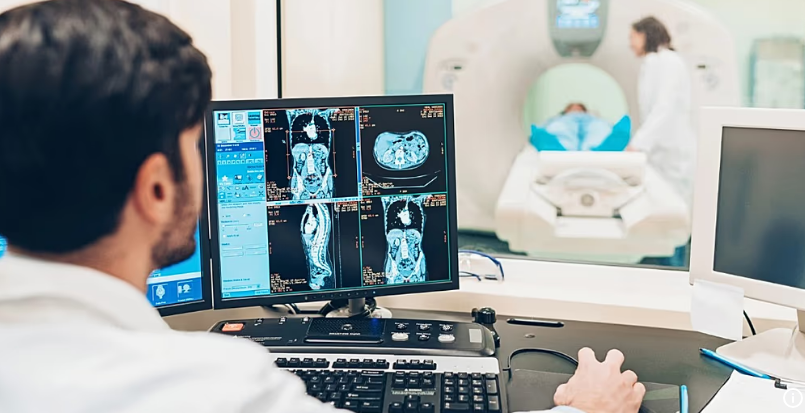
Artificial intelligence (AI) can now identify signs of chronic stress by analysing standard medical scans, according to a new study. Using a deep learning model to examine routine chest CT scans, researchers have discovered a biological marker that may indicate prolonged stress, a first in the field of medical imaging. AI can tell if you are stressed by looking at your medical scans, a new study shows.
Chronic stress is linked to a variety of serious health conditions, including heart disease, depression, and obesity. Until now, clinicians had no objective, scalable method to measure the long-term impact of stress beyond patient questionnaires or isolated biological markers.
The research, set to be presented at next week’s Radiological Society of North America (RSNA) meeting, analysed data from nearly 3,000 patients. The dataset included chest CT scans, cortisol levels, body mass index (BMI), blood pressure, heart rate, and responses to stress surveys. The study focused on the adrenal glands, which produce hormones responsible for regulating metabolism, the immune system, blood pressure, and the body’s response to stress. Researchers describe the adrenal glands as a “biological barometer” capable of reflecting cumulative stress in the body.
Using the AI model, scientists measured adrenal gland volume and compared it to other stress indicators. They found that patients reporting higher stress levels had enlarged adrenal glands, elevated cortisol, and an increased risk of heart failure. “For the first time, we can ‘see’ the long-term burden of stress inside the body, using a scan that patients already get every day in hospitals across the country,” said Shadpour Demehri, radiology professor and co-author of the study.
Demehri added that measuring cumulative stress had previously relied on time-consuming methods, such as tracking inflammation or cortisol spikes. The AI approach streamlines this process, offering a potential tool for early detection and intervention.
Researchers also highlighted that the AI model could help identify diseases associated with stress, particularly in older adults, allowing physicians to provide targeted care before complications develop. The study suggests that routine medical imaging could now serve a dual purpose: diagnosing current conditions and revealing underlying chronic stress that may otherwise go unnoticed.
While the results are promising, the study has not yet undergone peer review. The researchers emphasized the need for further studies to validate the model across broader populations and to explore its clinical applications in preventive care.
This development marks a significant step in integrating AI into everyday healthcare. By identifying stress-related physiological changes noninvasively, doctors may be able to intervene earlier, potentially reducing the impact of chronic stress on long-term health outcomes.