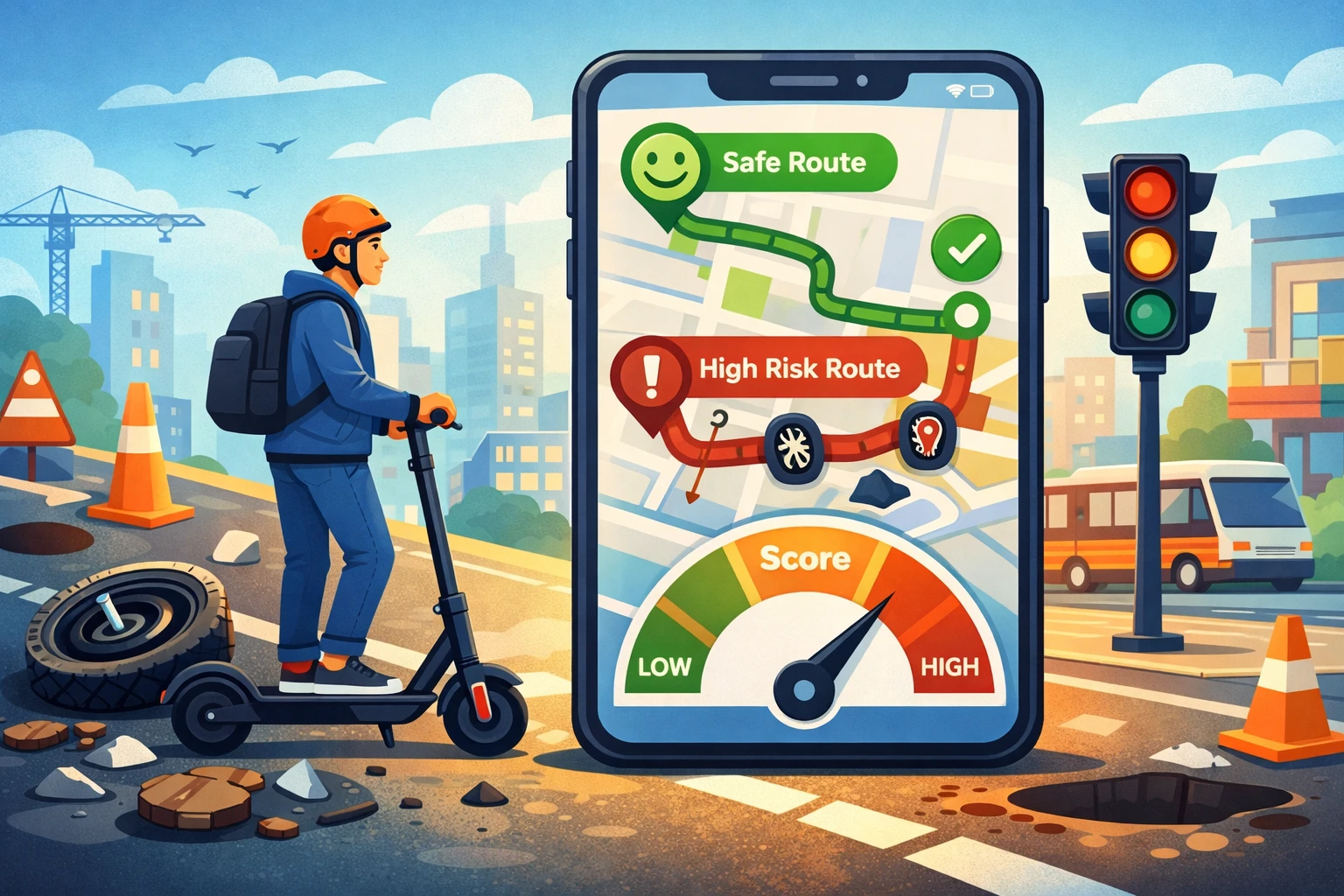
A city route can look calm on a map, then feel rough in real life. One block feels easy. The next block has fast cars, broken asphalt, and curbside debris. That mix can drain your focus and damage your tires.
A route score helps you pick better streets before you leave home. You can compare options, spot rough segments, and skip the blocks that create most trouble. For a quick pre-ride check, open the Route Stress + Puncture Risk Score Tool and test two routes side by side.
Short route equals best route. Right? Not always. A route that adds two or three minutes can feel much calmer, and your tires usually thank you for it.
Why Distance Alone Fails Most Riders
Many riders choose the shortest line and head out. That sounds logical, yet it misses the factors that shape real safety.
A short route can still have:
- High-speed traffic next to narrow lanes
- Dense intersections with hard stops
- Broken pavement and pothole chains
- Drain covers and raised seams
- Curbside glass, gravel, and metal bits
- Temporary construction zones
A slightly longer route with better pavement often feels smoother from start to finish. After a few weeks, that choice can lower stress and cut flat-tire headaches.
What a Good Risk Score Should Track
A useful score checks two areas.
First area: rider stress.
Second area: puncture exposure.
Rider stress signals
- Speed gap between cars and scooters
- Lane protection type, none, painted, separated
- Number of complex intersections per kilometer
- Bus or truck traffic on the same corridor
- Blind corners and poor visibility points
Puncture exposure signals
- Crack depth and pothole frequency
- Patch ridges and rough transitions
- Debris level near the curb line
- Drain patterns that catch narrow tires
- Loose gravel or metal fragments near worksites
Clear scoring bands help decision-making:
- Low risk: solid choice for daily rides
- Medium risk: rideable, needs more attention
- High risk: switch segments or choose another route
Simple Pre-Ride Routine That Works
Keep it practical. Use the same flow each day.
1) Compare two route options
Check your default route and one backup route. Save both in your map app. Run the score for morning and evening windows.
2) Mark the problem blocks
Do not reject a full route too fast. Tag the exact segments that push risk up. Then replace only those blocks. This saves time and keeps your routine stable.
3) Build a weekday pattern
Use one steady route for normal days. Keep one low-traffic variant for rain, roadworks, or heavy congestion. Daily decisions get easier this way.
4) Log outcomes for 14 days
After each ride, track three items:
- Stress feeling, low or medium or high
- Tire event, none or pressure drop or flat
- Travel time in minutes
At day 14, remove any route that repeats pressure loss or high stress.
Tire Setup Tips That Reduce Flats
Route choice matters. Tire setup matters just as much.
Match tire type to your road mix
- Smooth city lanes: quality street tire with healthy tread depth
- Mixed pavement and debris: puncture-resistant casing
- Rough joints and curb transitions: higher-volume tire for better impact control
Check pressure with a gauge
Use real pressure numbers, not finger feel. Check at least twice each week. Low pressure raises pinch-flat risk on hard edge hits. Overpressure can make rough roads feel harsh and twitchy.
Use sealant on tubeless systems
Sealant can close small punctures fast. Refresh on the interval from your tire brand. Check valve cores during top-ups.
Inspect tires after rides
Remove small glass and metal pieces early. Spin both wheels and scan for cuts, bulges, or embedded debris. Replace worn tires before casing threads appear.
Riding Habits That Protect Tires and Nerves
Small technique changes can make a big difference.
- Hold a line away from curb debris, lane width permitting
- Cross rails and sharp seams at a safer angle
- Slow before rough patches, then roll through smoothly
- Avoid abrupt curb drops with heavy backpack loads
- Keep both hands steady on broken pavement
Less impact means fewer punctures. Cleaner lines mean calmer rides.
Search Terms Riders Use on This Topic
This topic fits strong intent searches. People who type these terms usually want fast, practical help.
- safe scooter route planner
- e-scooter puncture risk checker
- flat tire prevention for electric scooter
- pothole route map for scooters
- scooter commute safety score
- bike lane hazard map
- best tire pressure for city scooter rides
- tubeless scooter tire sealant guide
- puncture-resistant scooter tires
- urban scooter route risk map
Use these phrases in natural spots across headings and body text. Keep language clear, then keep one contextual dofollow link to the tool page.
Why This Guest Post Angle Works
Editors value posts that teach a repeatable method. Riders value posts that solve a daily pain point. This topic does both.
- It gives a clear pre-ride process
- It ties route planning to tire reliability
- It supports a natural, relevant anchor link
- It targets practical search intent with strong relevance
That mix helps readership, trust, and backlink quality.
Final Note
A route stress and puncture score turns guesswork into a simple plan. You pick calmer streets, reduce tire damage risk, and keep your commute more predictable each week. Start with two route options, test for 14 days, then stick to the path that feels safer and stays flat-free.