

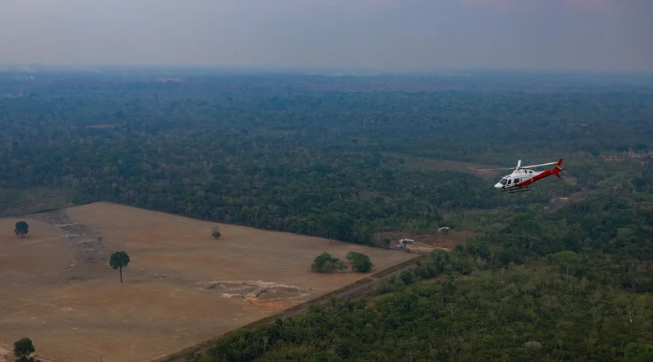
Deforestation in Brazil’s Amazon rainforest fell to its lowest level on record in the 12 months to July, according to data released by the country’s National Institute for Space Research (Inpe), marking a significant decline in forest destruction.
Around 3,335 square kilometres of the Amazon rainforest were cleared during the period, a reduction of approximately 42% from the previous 12 months. The figure is the lowest since Inpe began its historical monitoring series in 1988.
The previous record low was recorded in 2011-2012, when 4,571 square kilometres of forest were destroyed. By contrast, annual deforestation approached 30,000 square kilometres at its peak in the mid-1990s.
The figures were produced by Inpe’s PRODES satellite monitoring programme, which measures deforestation from August to July. The period is selected because lower cloud cover during the middle of the year makes it easier for satellites to identify areas where forests have been cleared.
Marcio Astrini, executive secretary of climate advocacy group Observatorio do Clima, described the latest figures as a historic achievement.
He said the results demonstrated that political commitment could help reduce deforestation and greenhouse gas emissions.
The decline comes under President Luiz Inacio Lula da Silva, who returned to office in 2023 with a pledge to end deforestation by 2030. Forest destruction had risen to its highest level in 15 years during the administration of his predecessor, Jair Bolsonaro.
Lula’s government has sought to strengthen environmental enforcement and protect the Amazon, which plays a major role in regulating the global climate by absorbing carbon dioxide and supporting extensive biodiversity.
The latest figures also arrive amid political debate over the future of Brazil’s environmental policies. Lula is due to face Senator Flavio Bolsonaro, the eldest son of former president Jair Bolsonaro, in a presidential election runoff on October 25, following a stronger-than-expected performance by the senator in the first round.
Flavio Bolsonaro has pledged to strengthen environmental oversight in the Amazon, with priority given to areas facing the greatest pressure from deforestation and wildfires. His manifesto also proposes directing law enforcement efforts towards organised crime rather than extractive workers and small farmers.
The election could influence how Brazil balances forest protection with economic activity in rural areas, including agriculture and resource extraction.
Deforestation also declined in Brazil’s Cerrado savanna, another ecologically important region facing pressure from agricultural expansion. Inpe data showed that forest and vegetation loss in the Cerrado fell by around 24% during the reporting period, reaching approximately 5,517 square kilometres.
That was the lowest figure in the monitoring series, which began in 2001.
The latest data offers evidence of progress in Brazil’s efforts to curb forest destruction, although maintaining the reductions will depend on continued enforcement, political decisions and action against illegal land clearing.