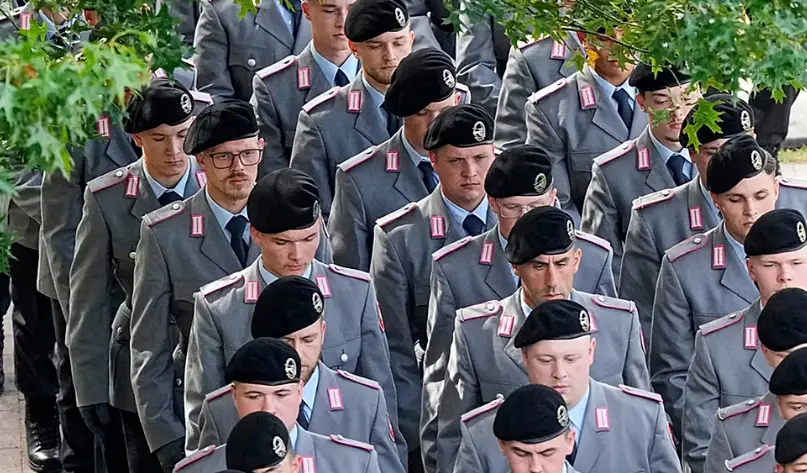
Germany is preparing to unveil a new model for military service aimed at strengthening the Bundeswehr, with Defence Minister Boris Pistorius signalling that an agreement could be reached this week despite ongoing divisions between the Social Democrats (SPD) and the conservative CDU/CSU bloc.
During a visit to troops in Münster on Monday, Pistorius said the government was close to finalising its approach. “Sometimes it just takes a bit of time, and not everything that is presented as a huge dispute ends up being one,” he stated. The announcement follows months of debate since the Bundestag passed a law intended to attract tens of thousands of new recruits each year.
The new service model is expected to combine voluntary enlistment with the option of compulsory conscription if recruitment falls short. Pistorius has championed a system inspired by Sweden’s model—one that begins with voluntary participation supported by a nationwide registration of young men. Compulsory service would only be introduced if voluntary enlistment fails to meet targets. The SPD aims to make military service more appealing through what Pistorius described as “a huge package to increase its attractiveness.”
The CDU/CSU, however, argues that voluntary service alone will not fill the ranks and supports a random selection process to prevent shortages. Pistorius opposes that idea, insisting selection should be based on physical fitness and professional aptitude. The conservatives are also pushing for concrete troop targets, while the SPD prefers a more flexible growth strategy, focused first on improving conditions and incentives for recruits.
Military historian Sönke Neitzel, speaking before the Defence Committee on 10 November, expressed doubt that a voluntary system alone could deliver the required numbers. He described the plan as “another document of hesitation and procrastination,” though he acknowledged it as a “step in the right direction to make the Bundeswehr fit for war.” Neitzel argued that compulsory conscription would be “absolutely essential” for a rapid personnel increase, but admitted that such a move remains politically unrealistic for now.
According to Neitzel’s analysis, the Defence Ministry expects the Bundeswehr’s ranks to grow through voluntary enlistment by about 8,000 soldiers per year until 2035. He warned that, at that pace, the buildup would take decades, comparing it to the slow expansion of the armed forces during the Cold War.
Pistorius estimates that between 60,000 and 100,000 additional soldiers are needed to meet NATO obligations and ensure the Bundeswehr’s readiness.
Although disagreements remain, the government plans to enact the new law by January 2026. If voluntary recruitment does not reach the required levels, general conscription for all young men could begin by mid-2027 or 2028.