


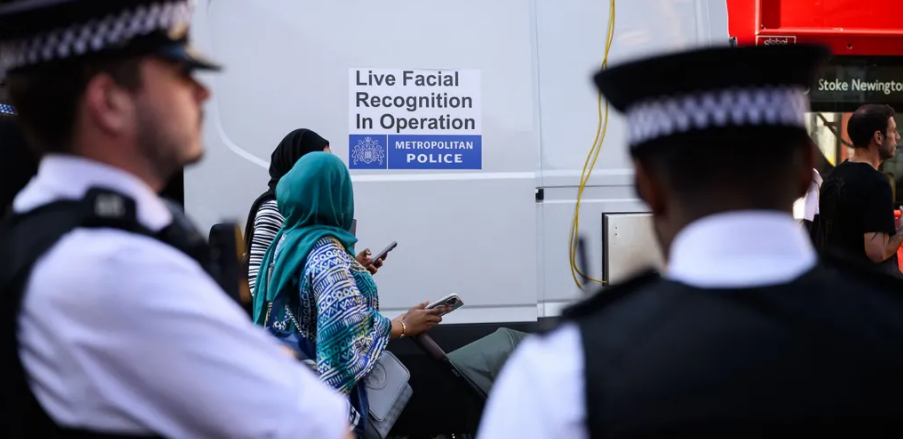
The Home Office has announced the rollout of 10 new live facial recognition (LFR) vans across seven police forces in England, aiming to track down suspects wanted for crimes including sexual offences, violent assaults, and homicides.
The technology, which scans the faces of people passing by and compares them to a watchlist of wanted individuals, has been credited with aiding 580 arrests in London over the past year. These include 52 registered sex offenders found to be in breach of their conditions.
The new vans — which will approximately double the number in operation — will be shared by Greater Manchester, West Yorkshire, Bedfordshire, Surrey, Sussex, Thames Valley, and Hampshire police forces. Each vehicle will be staffed by a trained officer to verify potential matches flagged by the system.
First deployed in England and Wales in 2017 at the UEFA Champions League final in Cardiff, LFR has so far been mainly used in South Wales, London, and Essex, including at large events such as concerts to identify suspected paedophiles and terrorists. The government insists the technology is a “powerful tool for policing” and will be used in a “measured, proportionate way,” with deployments signposted to the public.
However, the expansion has sparked a fresh wave of criticism from privacy advocates. Campaign group Big Brother Watch has labelled the move “a significant expansion of the surveillance state” and is pursuing a legal challenge against the Metropolitan Police over its use of LFR. The group’s interim director, Rebecca Vincent, warned that police were rolling out “intrusive technology” without a legislative framework, despite a pending judicial review.
Labour peer Baroness Chakrabarti also voiced concern, describing LFR as “incredibly intrusive” and warning it could undermine privacy, freedom of assembly, and public trust. While she welcomed the government’s consultation on potential safeguards, she argued the technology had so far been deployed “completely outside the law.”
The Home Office counters that officers will be required to follow the College of Policing’s guidance and the Surveillance Camera Code of Practice. It also cites independent testing by the National Physical Laboratory, which found no bias for ethnicity, age, or gender in the algorithm used by police.
Supporters, including Ryan Wain from the Tony Blair Institute think tank, argue the benefits outweigh the risks. “It means violent criminals on the police’s most wanted list can be picked out in a crowd and caught. Not on the list? Your face will be pixelated, and no data will be stored,” he said.
The announcement came alongside a separate Home Office pledge that every neighbourhood in England and Wales will now have a named, contactable police officer, with forces committed to responding to public queries within 72 hours.