

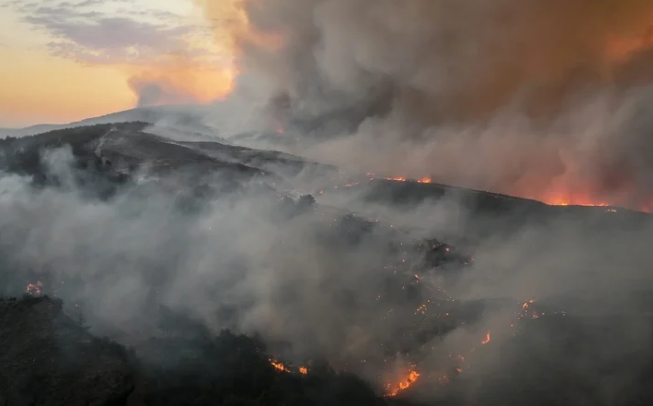
More than 250 residents have been evacuated from their homes as a wildfire tore through the Gallipoli peninsula in northwestern Turkey overnight, local officials confirmed on Wednesday. Firefighters are continuing efforts to bring the blaze under control near the Dardanelles Strait, a critical international waterway linking the Mediterranean to the Black Sea.
The fire broke out on Tuesday in Canakkale province and spread rapidly across the dry hills near the town of Gelibolu, fanned by strong winds. Canakkale governor Omer Toraman said on social media that 251 people from five villages were moved to safety as a precaution.
Footage from the scene showed flames engulfing hillsides and thick smoke billowing into the night sky, while emergency teams worked to protect villages and farmland. The governor described the situation as aggravated by “extremely severe drought” that has persisted across the region over the past year.
At first light, aerial firefighting support resumed, with 12 planes and 18 helicopters joining nearly 900 personnel in battling the blaze, according to the General Directorate of Forestry. Fire crews fought overnight to contain the flames, which threatened both residential areas and historic landmarks.
Authorities announced the temporary closure of memorials and battlefields around Eceabat, an area of great historical significance where thousands of soldiers died during World War I. The Gallipoli peninsula, which attracts large numbers of international visitors, is also close to the ancient ruins of Troy, another major tourist destination.
The wildfire is the latest in a series of blazes to hit northwestern Turkey this summer. Just days earlier, a fire on the opposite side of the Dardanelles forced the evacuation of 2,000 people, with around 80 treated for smoke inhalation. In another incident, shipping traffic through the strait had to be suspended when fire threatened coastal areas.
So far this year, Turkey has recorded 192 wildfires that have scorched more than 110,000 hectares of land, according to data from the European Forest Fire Information System. The figure highlights the growing scale of the threat, with scientists warning that climate change is fuelling more frequent and intense wildfires in the Mediterranean region.
Experts have urged Turkey to strengthen fire prevention measures and improve resilience to climate-related disasters, noting that prolonged dry spells, shifting weather patterns, and high winds have created dangerous conditions across the country.
While winds eased slightly on Wednesday morning, authorities cautioned that the threat was far from over, with high temperatures and parched vegetation providing ample fuel for the flames.