

Iran’s top military commander has warned that Tehran remains skeptical of Israel’s commitment to a ceasefire agreement that brought an end to their recent 12-day conflict, saying the country is prepared to respond with force if hostilities resume.
“We did not start the war, but we have responded to the aggressor with all our power,” said General Abdolrahim Mousavi, Chief of Staff of Iran’s armed forces, in comments broadcast on state television. “As we have serious doubts over the enemy’s compliance with its commitments, including the ceasefire, we are ready to respond with force.”
His statement comes six days into the ceasefire, which was announced by U.S. President Donald Trump earlier this week following intensive negotiations. The truce ended a sharp escalation of violence that began on June 13.
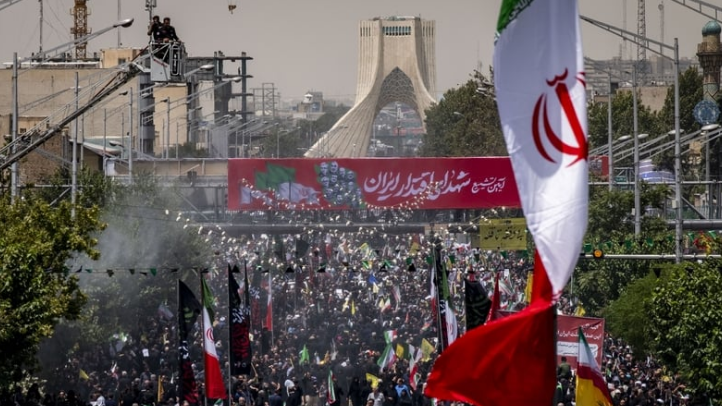
Tensions remain high in Iran, particularly after a deadly Israeli airstrike hit Tehran’s Evin prison on Monday, reportedly killing at least 71 people. Iranian judiciary spokesman Asghar Jahangir confirmed the toll, stating that the victims included administrative staff, guards, prisoners, and visiting family members, as well as civilians living nearby.
The Evin prison strike has drawn widespread condemnation from within Iran. Images released by the judiciary showed significant damage to the facility, including collapsed ceilings and debris-strewn visitation areas. The prison, known for housing political prisoners and foreign nationals, including Nobel laureate Narges Mohammadi, has reportedly been emptied of inmates following the attack, although authorities have not provided further details.
Meanwhile, Rafael Grossi, head of the UN nuclear watchdog, warned that Iran may be capable of producing enriched uranium within “a matter of months.” His comments contradict assertions by President Trump, who claimed U.S. bombing raids had set back Iran’s nuclear programme by decades.
Grossi told CBS News that while U.S. stealth bomber attacks inflicted “some damage,” they were not sufficient to completely derail Tehran’s nuclear capabilities. He urged access for inspectors to Iran’s nuclear sites to assess the full extent of the impact.
On the diplomatic front, Germany has become the first Western nation to send a high-ranking official to Israel following the conflict. Interior Minister Alexander Dobrindt visited the site of an Iranian missile strike in Bat Yam, near Tel Aviv, where nine people, including three children, were killed.
Speaking at the site, Dobrindt called for stronger international support for Israel. “We must deepen our support,” he said, echoing remarks by German Chancellor Friedrich Merz, who recently described Israel’s actions as doing “the dirty work… for all of us” by targeting Iran’s nuclear infrastructure.
The war, which began with Israeli strikes on suspected Iranian nuclear sites, has left a heavy toll. Israeli authorities report 28 deaths from more than 50 incoming missiles, while Iranian officials say 627 civilians were killed and nearly 4,900 injured during the 12-day bombardment.