
An investigation by RTÉ has found that at least 15 garment factories in Bangladesh, which supply major Irish clothing retailers, imported hundreds of tons of cotton fabric in 2024 from Chinese companies linked to forced labour in Xinjiang.
The findings raise serious questions about the integrity of “sustainable” and “ethically sourced” labels on Ireland’s high streets. Cotton from Xinjiang, a region that produces about one-fifth of the world’s supply, has been repeatedly tied to coercive labour programmes targeting the Uyghur population. The United Nations has described abuses in the region as possible crimes against humanity.
In October 2023, RTÉ obtained footage from Aksu, Xinjiang’s cotton-growing heartland, showing Uyghur workers in Esquel Group’s cotton yards. Wearing caps marked with the company’s logo, workers were seen loading cotton onto trucks under the watch of a uniformed man from the People’s Liberation Army. Esquel, one of China’s largest textile producers, has long-standing operations in Xinjiang. Another company, Jiangsu Lianfa Textiles, has also been linked to state-backed labour transfer schemes.
Despite international scrutiny, records examined by RTÉ show that both companies remain active in Xinjiang and continue to supply cotton to factories abroad. Export data revealed that Bangladeshi manufacturers sourced significant quantities of fabric from Esquel and Lianfa, later producing clothing for well-known Irish retailers, including Penneys, Tesco, Marks & Spencer, and Dunnes Stores.
Uyghurs who have fled China describe systemic repression that intensified under President Xi Jinping’s “Strike Hard Campaign” launched in 2014. Testimonies detail widespread surveillance, destruction of Islamic sites, mass detentions, forced sterilisation, and compulsory labour schemes. By 2017, authorities had reportedly detained more than a million Uyghurs in re-education and detention centres.
RTÉ’s investigation combined satellite imagery, social media videos, government documents, and corporate records to verify the ongoing links between Xinjiang cotton and global supply chains. The evidence suggests that forced labour remains embedded within the production process, despite retailer assurances to the contrary.
Irish retailers contacted by RTÉ defended their sourcing practices, citing membership in certification programmes such as the Better Cotton Initiative and the use of isotopic testing through companies like Oritain, which analyses the atomic composition of cotton fibres to identify their geographic origin. Marks & Spencer and Penneys confirmed they work with Oritain, while Tesco, Dunnes, and Marks & Spencer are members of Better Cotton.
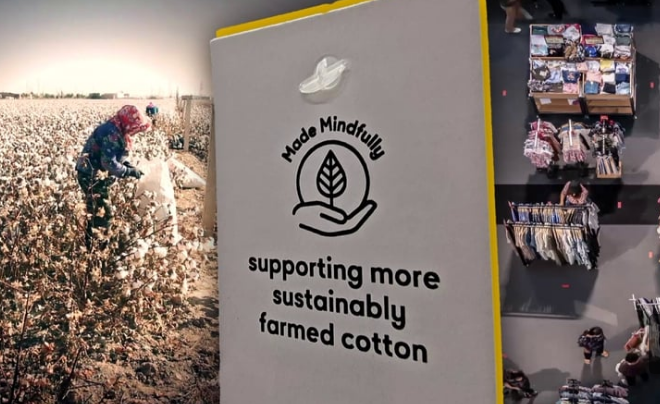
Yet critics argue that such systems, while reassuring to consumers, may not provide absolute guarantees against forced labour entering supply chains. “Better Cotton – it’s sustainably sourced,” read the labels across shop floors, but RTÉ’s findings suggest that behind the claims lies a far more troubling picture.
The revelations highlight the persistent challenges of tracing cotton’s journey from Xinjiang fields to Western high streets — and the human cost hidden behind promises of sustainability.