

Global gold prices have hit record highs in 2025 amid geopolitical instability, drawing interest from central banks, hedge funds, and retail investors alike. But behind the glimmer lies a darker story: in West Africa’s Sahel region, gold is becoming a crucial financial lifeline for military regimes — and a driver of violent conflict.
Mali, Burkina Faso, and Niger — three countries under military rule — produce around 230 tonnes of gold annually, valued at nearly $15 billion. While gold is being marketed by their governments as a tool of national “sovereignty,” much of it is mined informally, away from government oversight, and is increasingly tied to insurgent financing and foreign influence.
“With gold prices at a historic high, the military governments are hoping to benefit directly,” said Beverly Ochieng, a senior researcher at Control Risks, speaking to the BBC. In recent years, these regimes have leaned on gold revenues to fund military campaigns against jihadist groups and to strengthen their political grip.
Russian firms have expanded their presence in the region’s gold industry, replacing many Western-owned interests. In Mali, the junta recently launched a new gold refinery with partial ownership by the Russian Yadran Group, promising job creation while also deepening Moscow’s influence. Similar projects are underway in Burkina Faso, which has also established a state-run mining company and imposed local ownership requirements on foreign firms.
Meanwhile, propaganda campaigns have praised military rulers like Burkina Faso’s Capt Ibrahim Traoré, with even AI-generated music videos casting him as a national hero.
But critics say the reality is more troubling. Human Rights Watch has documented atrocities by both government forces and foreign mercenaries, particularly the Wagner Group and its successor, Africa Corps. In Mali, security spending has skyrocketed to more than one-fifth of the national budget — with few signs that these investments are improving stability.
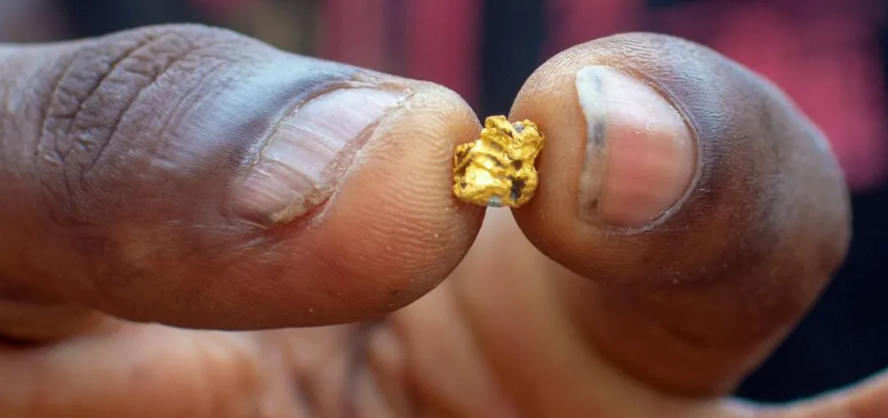
Artisanal and small-scale mining, which dominates gold production in the region, often takes place in unregulated sites, making it a lucrative target for armed groups. Militants, particularly al-Qaeda affiliate JNIM, are intensifying attacks and expanding territorial control, capitalising on the soaring global demand.
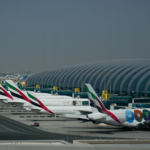
Much of this gold ends up in the UAE, a major hub for gold refining. While international standards for ethical gold sourcing exist, enforcement remains weak and tracing gold’s origin is nearly impossible once it is smelted.
“Gold has become Africa’s new conflict commodity,” warned Alex Vines of Chatham House, a former UN investigator. “Unlike diamonds, there’s no Kimberley Process equivalent that effectively regulates the gold trade.”
With limited transparency and few safeguards in place, the global gold rush may be enriching governments and insurgents alike — while leaving behind the miners and communities caught in the crossfire.