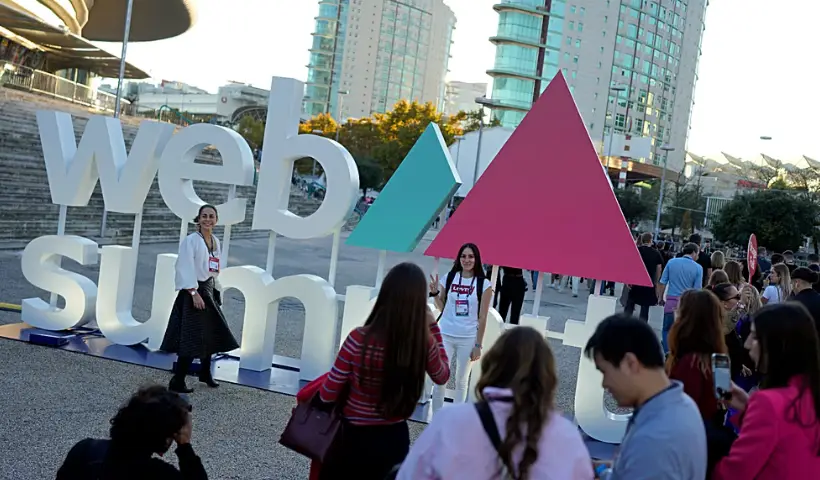
The Portuguese capital is once again buzzing with innovation as Web Summit, one of Europe’s biggest technology conferences, opened on Monday evening for its 10th year in Lisbon. Over 70,000 attendees are expected at the event, which brings together tech giants, startups, entrepreneurs, and global leaders to discuss the future of technology, with artificial intelligence taking centre stage.
But even before the conference began, it caused turbulence—literally. Private jets carrying some of the world’s top tech executives were forced to land in airports outside Lisbon, and even across the border in Spain, as the city’s main airport ran out of slots. Organisers issued a statement warning of a “shortage of private jet slots during Web Summit at Lisbon Airport and surrounding smaller airports,” with authorities struggling to manage the surge in air traffic.
Once inside the venue, the spotlight quickly shifted from logistical challenges to the high-profile names and ambitious ideas defining the summit. On the main stage, attendees heard from the CEO and co-founder of vibe coding company Lovable, former tennis star Maria Sharapova, and influencer Khaby Lame. Though the conference focuses on technology, sports figures have long been part of its appeal, and this year’s lineup includes Formula 1 leaders Toto Wolff of Mercedes AMG Petronas and Laurent Mekies of Oracle Red Bull Racing.
Web Summit CEO Paddy Cosgrave opened the event by reflecting on how far it has come since its early days in Dublin. He praised Lisbon for helping the conference grow into a global platform where emerging startups meet established industry leaders. Companies such as Revolut, which gained visibility through Web Summit, have since become international success stories.
Major players like Meta, Nvidia, Microsoft, and Boston Dynamics are among those showcasing their latest innovations this year. Cosgrave also highlighted the growing participation of startups, noting that Poland brought a record number of exhibitors while Germany’s presence has declined. A particular emphasis has been placed on Chinese technology and the global race for AI dominance.
Artificial intelligence remains the key theme, with discussions ranging from AI-powered coding tools to government regulation and ethical use. Henna Virkkunen, European Commissioner for tech sovereignty, security, and democracy, is among those addressing how Europe can balance innovation with oversight. Another session, hosted by Euronews, will feature Des Hogan, chair of Ireland’s Data Protection Commission, focusing on data governance and privacy.
The conference is also examining the environmental side of AI. Electricity use from data centres reached 415 terawatt hours globally in 2024—about 1.5% of total energy consumption—according to the International Energy Agency. Euronews will host a panel on how Europe can lead in AI through sustainable infrastructure, featuring the CEOs of START Campus and Nscale, companies developing renewable-powered and advanced data centres.
With 2,500 startups exhibiting and 900 speakers across the week, Web Summit 2025 is expected to set the tone for how technology, policy, and innovation will evolve in the years ahead.