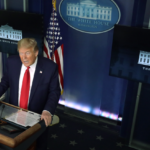



US President Donald Trump has defended his sweeping tariffs on imports from around the world, saying they will create American jobs, strengthen the economy, and boost tax revenues. But growing evidence suggests the measures may be driving exporters toward rival markets, particularly China, while raising costs for US businesses and consumers.
Brazil, the world’s largest coffee producer, has been hit with a 50% tariff on exports to the US—one of the steepest imposed by Washington. The levy threatens to disrupt trade in a commodity that supplies about a third of America’s coffee demand. Agricultural brokers say Brazilian exporters are now turning to China, where a booming café culture and vast consumer base are making it an increasingly attractive alternative.
“If the tariffs are meant to weaken Brazil, in reality, it is pushing sellers closer to China,” said Hugo Portes, a global supply chain specialist. He noted that more than 180 Brazilian coffee firms registered to export to China in July, an “unprecedented” move that could reshape global supply chains. Last year, Brazil’s producers also struck a billion-dollar deal with Luckin Coffee, China’s fast-growing rival to Starbucks.
For US coffee roasters, the tariffs mean costs are set to climb. Consultant Luke Waite estimated that the price of a five-pound bag of Brazilian beans could rise by 25%, translating into a 7% increase per cup of coffee for American consumers.
Similar shifts are playing out in India, where exporters of seafood and tea have also been hit by 50% tariffs. The penalties were imposed as part of Washington’s effort to pressure Delhi over its purchase of Russian oil. India’s seafood industry, which counts the US as its biggest buyer, is already seeing orders paused. “It will be a difficult time,” said K.N. Raghavan of the Seafood Exporters Association of India, though he expressed hope that trade talks could ease tensions.
For now, exporters are looking to China and Europe to fill the gap. “Countries like China and Europe will have a greater share in our exports going forward,” said Abuthahir Aboobakar, sales director of Jeelani Marine Products, which supplies prawns to the US and 60 other markets worldwide.
American businesses, meanwhile, are warning of ripple effects. Walmart has said it may soon raise prices as tariffs drive up costs, while the US seafood industry is pushing for exemptions, arguing that domestic production cannot meet demand.
Analysts say the burden will ultimately fall on US consumers, as companies have little choice but to pass on higher prices. For exporters, however, China’s growing appetite for coffee, seafood, and other goods is emerging as a “shining light,” offering new opportunities even as the US risks losing its position as the world’s top market.