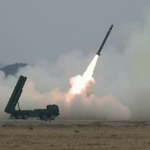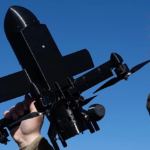



The United Arab Emirates says it is prepared to withstand the latest wave of attacks from Iran, emphasizing both national resilience and its role as a global economic and energy hub. In an interview with Euronews, Minister of State Lana Nusseibeh outlined the country’s response to the ongoing missile and drone strikes, which have surpassed 1,800 in the last two weeks.
Nusseibeh framed the attacks as a challenge not only to the UAE but to its broader model of governance, which promotes coexistence, tolerance, and regional stability. “The Emirates are defending more than a country and its residents; we are defending a model of coexistence, of tolerance, of peace for the wider region,” she said.
The minister condemned Iran’s actions as aggressive and destabilizing. “Iran needs to desist from its attacks and understand that it cannot behave as a regional bully,” Nusseibeh said, adding that the UAE remains open to diplomatic solutions while standing firm in protecting its citizens and infrastructure.
The crisis has also highlighted potential global economic consequences, particularly for energy and food security. Nusseibeh stressed that the UAE continues efforts to maintain stable energy supplies despite Iran’s blockade of the Strait of Hormuz, which has disrupted markets and contributed to rising prices worldwide. She reassured international partners that the country remains a committed supplier to global energy markets and is prepared to mitigate the impact of the crisis.
The minister also highlighted the UAE’s focus on safeguarding its residents, including the 500,000 Europeans living in the country. “We will allow them not only to prosper but to thrive here in this country,” she said.
Despite the security situation, the UAE’s long-term economic and infrastructure plans remain on track. Nusseibeh noted that the country’s diversified economy, built over decades, has proven resilient to past crises. Investments in sectors such as finance, logistics, technology, and renewable energy have strengthened the UAE’s ability to adapt to shocks.
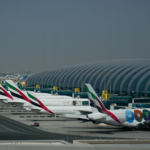
One sign of resilience has been the partial return of aviation operations, with national carriers Emirates and Etihad achieving up to 50 percent of pre-crisis capacity. Many residents who initially considered leaving the country have chosen to stay, reflecting strong public confidence.
Nusseibeh also highlighted the UAE’s ongoing investments in emerging industries, particularly artificial intelligence. She pointed to a $1.5 trillion partnership with the United States for AI data centres, with similar projects underway in Europe, positioning the UAE as a hub for advanced technology infrastructure.
While acknowledging that no government can fully control regional geopolitics, Nusseibeh emphasized that the UAE’s focus remains on protecting its population, maintaining stability, and advancing its long-term development model. “We adapt, we respond, and we are flexible,” she said, adding that the country’s commitment is to its people and to sustaining its role as a stable, forward-looking nation in a turbulent region.