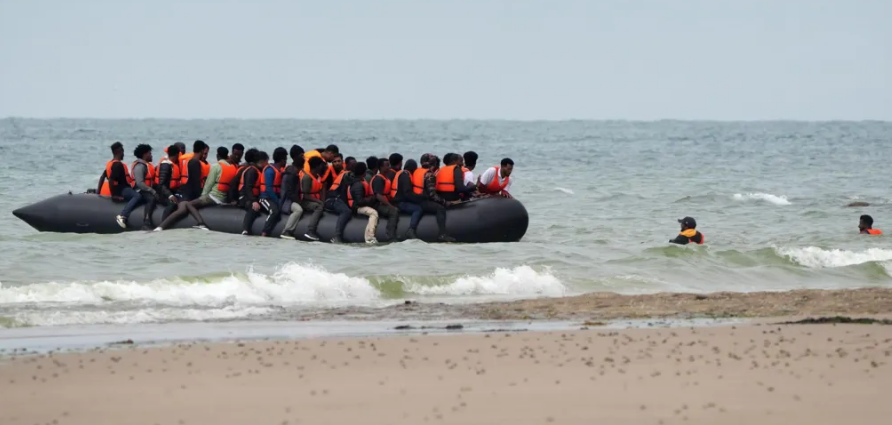
The UK has launched a major crackdown on people-smuggling networks, freezing the assets of 25 individuals and organisations accused of facilitating illegal Channel crossings, as small boat arrivals reach record levels this year.
The newly imposed sanctions—part of the Labour government’s broader efforts to tackle illegal migration—target gang leaders, middlemen, and businesses suspected of aiding human trafficking operations. The individuals on the list have also been banned from travelling to the UK.
Among those named is Albanian national Bledar Lala, alleged to have coordinated smuggling routes from Belgium, and Alen Basil, a former police translator now reportedly operating a trafficking network out of Serbia. Also included is Chinese firm Weihai Yamar Outdoors Product Co, accused of manufacturing inflatable boats advertised specifically for people-smuggling.
Foreign Secretary David Lammy hailed the measures as a “landmark moment,” pledging to hold smugglers accountable wherever they operate. “My message to the gangs who callously risk vulnerable lives for profit is this: we know who you are, and we will work with our partners around the world to hold you to account,” he said.
The sanctions allow UK authorities to seize assets and block financial dealings within the country. British companies are also now barred from engaging with the named individuals and organisations.
However, experts have warned that the overall impact of the sanctions may be limited. Dr Madeleine Sumption, Director of Oxford University’s Migration Observatory, said the approach targets only a small segment of a much larger network. “There are so many people involved in the industry that targeting people individually is probably only going to have an impact around the margins,” she said, adding that the effectiveness also depends on cooperation from other countries where smugglers operate.
Criticism also came from the opposition. Conservative Shadow Home Secretary Chris Philp dismissed the sanctions as symbolic. “Freezing a few bank accounts in Baghdad or slapping a travel ban on a dinghy dealer in Damascus won’t stop small boat crossings,” he said. “The gangs aren’t scared—because Labour won’t detain, deport or enforce the border.”
In response, Migration Minister Seema Malhotra defended the strategy, arguing that disrupting financial links with the UK would weaken trafficking groups’ operations.
Since taking office in July 2024, Labour has introduced a series of anti-smuggling initiatives, including a new offence of endangering lives at sea and proposed legislation allowing the use of counter-terror powers against smugglers.
Despite these efforts, illegal crossings continue to surge. Over 21,000 people have crossed the Channel in small boats so far in 2025—a 56% rise compared to the same period last year—raising further questions about the long-term effectiveness of current deterrence measures.