

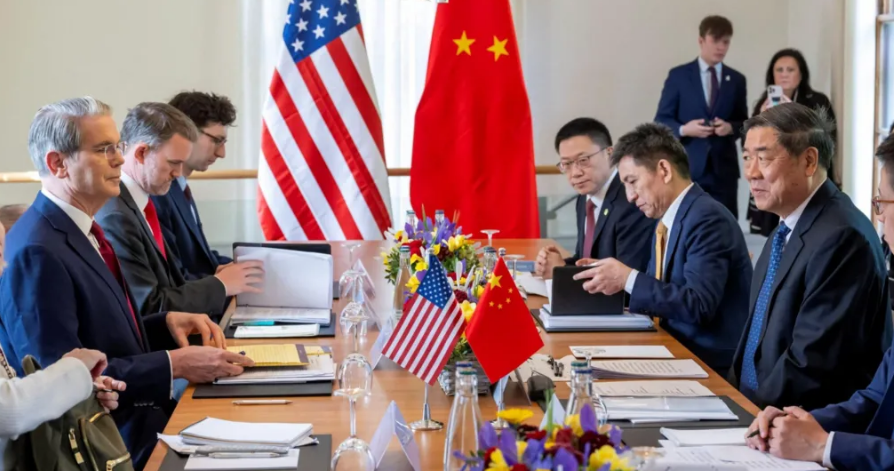
The United States and China have reopened trade talks in Sweden amid growing expectations that both sides will agree to extend their current 90-day tariff truce, easing tensions between the world’s two largest economies.
The negotiations, taking place in Stockholm, are being led by US Treasury Secretary Scott Bessent and Chinese Vice Premier He Lifeng. The talks come just hours after US President Donald Trump announced a new trade framework with the European Union, further highlighting the administration’s recent push to reshape global trade relationships.
The current US-China tariff ceasefire is set to expire on August 12. Under the truce, both countries agreed to temporarily roll back import tariffs that had climbed above 100% earlier this year, following escalating trade measures after Trump’s return to the White House in January.
According to reports in the South China Morning Post, officials from both Washington and Beijing expect the truce to be extended by another three months, although no formal announcement has yet been made. US officials, including Bessent, have expressed optimism about the direction of talks, with the Treasury Secretary stating last week that discussions were in “a very good place.”
The Financial Times also reported that the Biden administration has paused enforcement of certain restrictions on technology exports to China, including high-end chips used for artificial intelligence, to avoid derailing negotiations. National security concerns remain a sticking point, however, with US officials warning that advanced American technology could support China’s military or give Chinese firms an edge in emerging tech sectors.
The renewed dialogue comes at a time when Washington is striking high-profile trade deals with key global partners. On Sunday, Trump and European Commission President Ursula von der Leyen announced a long-awaited trade agreement, ending a protracted impasse over tariffs between the US and the EU. Days earlier, a separate deal was reached with Japan, involving $550 billion in Japanese investment in the US and a 15% tariff cap on Japanese exports—lower than the initially proposed 25%.
Other recent agreements have been concluded with the UK, Indonesia, and Vietnam. Britain’s negotiated 10% tariff rate remains the most favourable among current US trade partners.
While a comprehensive breakthrough in US-China trade relations is not expected immediately, analysts say an extension of the tariff truce would bring relief to global markets and help avert further disruption to international trade flows.
With Trump eyeing a possible summit with Chinese President Xi Jinping later this year, the outcome of the Sweden talks could prove pivotal in shaping the next phase of US-China economic relations.