


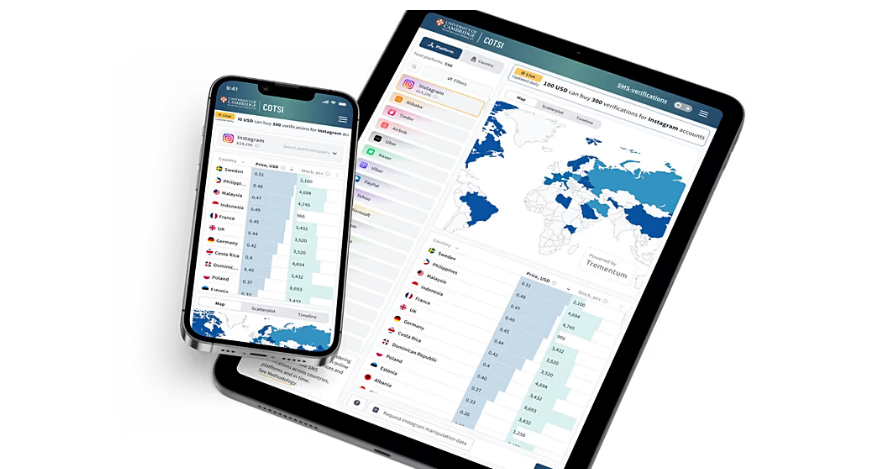
A new index developed by the University of Cambridge has revealed the scale and affordability of the underground market for fake social media account verifications, raising fresh concerns about online manipulation and digital security. According to researchers, fake verification badges can be purchased for as little as eight cents, enabling the rapid creation of networks that imitate authentic users across major online platforms.
The Cambridge Online Trust and Safety Index (COTSI), launched on Thursday, is described as the first global tool capable of tracking real-time prices for verifying fraudulent accounts. The index monitors more than 500 platforms, including TikTok, Instagram, Amazon, Spotify and Uber. By analysing data from sellers operating across the dark web and black-market channels, the project highlights how accessible and inexpensive these services have become.
Researchers say the low cost of creating fake accounts is contributing to the rise of “bot armies” — large groups of automated or semi-automated profiles designed to mimic genuine human activity. These networks can distort online conversations, amplify misleading content, and promote scams or commercial products. They can also be deployed to influence political messaging, creating an illusion of public support or opposition during major events such as elections or policy debates.
The team behind the index said the findings come at a sensitive time for governments and regulators working to contain misinformation. Many popular platforms have reduced investment in content monitoring during the past two years, while others have introduced programmes that reward users for generating high volumes of engagement. Researchers warn that such incentives may encourage the use of artificially inflated interactions, making fake accounts even more valuable to those seeking influence.
According to Cambridge analysts, the market for fraudulent verification has become highly sophisticated. Sellers offer tiered packages, guaranteeing features such as blue-badge symbols, verified rankings or the appearance of longstanding account history. Prices vary by platform and country, but the index shows that even the most complex packages remain within easy reach for groups attempting to manipulate public debate or carry out coordinated campaigns.
The launch of COTSI marks the first attempt to document these prices on a global scale. By presenting live data on the cost of creating fake identities, researchers hope to give policymakers, technology companies and security agencies a clearer picture of how digital manipulation is evolving. The study’s authors stress that tracking these markets is essential for understanding the risks posed by unauthenticated accounts, particularly during periods of political tension.
The university said the index will be updated regularly and will remain publicly accessible as part of its efforts to strengthen digital transparency worldwide.