

Finland is adding artificial intelligence literacy to its school curriculum, aiming to teach children as young as three how to recognise AI-generated disinformation. The initiative builds on decades of media literacy education designed to help students critically analyse information and resist propaganda, particularly from across the country’s 1,340-kilometre border with Russia.
The move comes amid growing concerns over the use of AI in spreading false content. Following Russia’s full-scale invasion of Ukraine nearly four years ago, disinformation campaigns across Europe have intensified. Finland’s accession to NATO in 2023 further heightened the need to shield citizens from external influence.
Kiia Hakkala, a pedagogical specialist for the City of Helsinki, said the skills are essential not only for individuals but for national safety. “Having good media literacy skills is a very big civic skill,” she said. “It’s very important to the nation’s safety and to the safety of our democracy.”
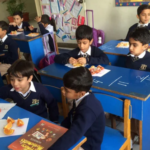
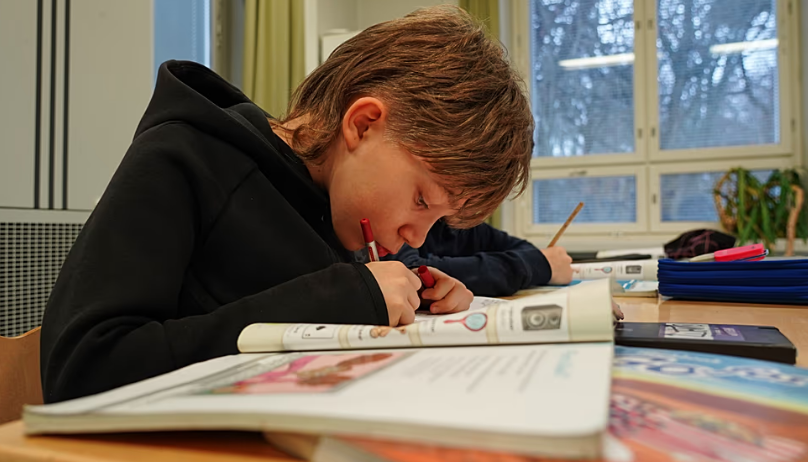
At Tapanila Primary School, north of Helsinki, fourth graders are learning to identify fake news. Teacher Ville Vanhanen said students start by reading headlines and short texts, gradually moving on to more complex tasks such as evaluating online videos and images for signs of AI manipulation. “We’ve been studying how to recognise if a picture or a video is made by AI,” he said.
The Finnish approach combines classroom instruction with broader societal initiatives. National newspapers participate in an annual “Newspaper Week,” sending print materials to students to encourage critical reading. Helsingin Sanomat, Finland’s largest daily, introduced an “ABC Book of Media Literacy” in 2024, distributed to all 15-year-olds entering upper secondary school. Managing editor Jussi Pullinen said the goal is to provide verified, trustworthy information. “It’s really important for us to be seen as a place where you can get information that’s been verified and done in a transparent way,” he said.
Media literacy has been part of Finnish schools since the 1990s, and courses are also available for adults who may be more vulnerable to disinformation. The Nordic nation consistently ranks at the top of the European Media Literacy Index, which evaluates how well citizens understand and critically assess information.
Education Minister Anders Adlercreutz said the rise of AI makes the effort even more urgent. “We are bombarded with disinformation, and our institutions and democracy are challenged,” he said. Experts warn that while current AI-generated content can often be spotted due to its quality, emerging technologies, including agentic AI, will make detecting fake information increasingly difficult.
Martha Turnbull, director of hybrid influence at the European Centre of Excellence for Countering Hybrid Threats in Helsinki, said, “It already is much harder in the information space to spot what’s real and what’s not. As technology develops, it will become increasingly difficult to distinguish AI-generated content from reality.”
Finland’s new curriculum aims to prepare students for this evolving challenge, equipping them with the skills to navigate an increasingly complex information landscape.