Foreign propaganda is not a new phenomenon, but the rise of the internet and social media has created new channels for misinformation and disinformation. Russia has been repeatedly accused of election interference, both in the United States and across Europe, making it a common focus of concern.
The Eurobarometer survey found that more than two in five Europeans (42%) see foreign information manipulation, interference, and disinformation as a serious threat to EU democracy. In some countries, this share exceeds 50 percent. The survey also identified the lack of transparency in how political content is promoted online, particularly through new technologies like artificial intelligence, as the third most pressing challenge, cited by 32 percent of respondents. The most frequently mentioned concern was growing public distrust in democratic institutions, highlighted by 49 percent of participants.
Experts caution against over-interpreting the results. Dr. Pawel Zerka, senior policy fellow at the European Council on Foreign Relations, said, “The question itself tells us a lot about the European Commission’s perception of potential threats to democracy. This doesn’t mean the results are completely useless, but context matters.”
Researchers point to two competing explanations for the public concern. Sander van der Linden of the University of Cambridge said media coverage may amplify fear unnecessarily, while also acknowledging that foreign information manipulation is occurring on a large scale, increasingly assisted by AI. “Personally, I would say that concern is warranted,” he told Euronews Next.
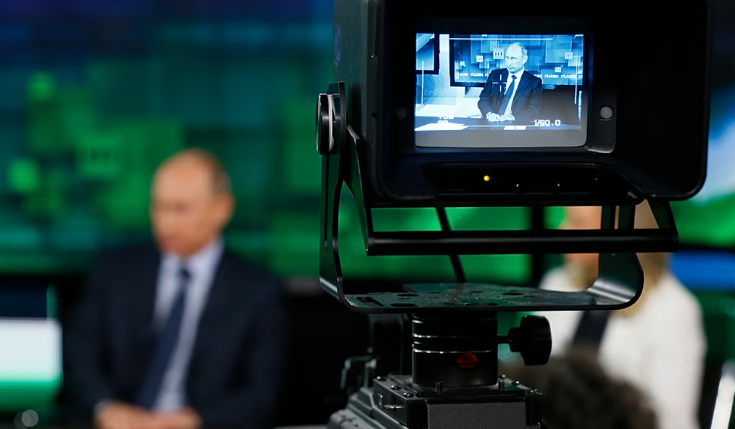
The role of media outlets such as Russia Today (RT) has also been debated. Ben O’Loughlin, a professor at Royal Holloway, University of London, said that while some RT content was manipulative, other reports were accurate, reflecting genuine public dissatisfaction. He argued that governments’ reactions often exaggerate the perception of foreign influence.
Sweden stands out in the survey, with 73 percent of respondents seeing foreign information manipulation as the EU’s most serious challenge. Researcher Cristina Arribas of Universidad Rey Juan Carlos attributed this to Sweden’s proximity to Russia, its recent NATO membership, and strong media literacy, high education levels, and a pluralistic media system. Finland and the Netherlands followed at 55 percent, Denmark at 51 percent, and Germany at 49 percent. In contrast, Czechia, Portugal, and Estonia recorded the lowest concern levels at 28 percent.
Arribas noted that geographical proximity to Russia does not consistently explain concern. For instance, Baltic states, Poland, and Romania expressed comparatively low levels of worry, suggesting that structural factors such as education, media freedom, and democratic culture play a larger role in shaping perceptions.
The survey highlights that while foreign information manipulation is widely perceived as a major threat, experts advise interpreting the findings carefully, considering both media influence and the structural resilience of different EU societies.