

World and technology leaders are meeting in New Delhi this week for the annual AI Impact Summit, aimed at creating a unified approach to artificial intelligence governance and international cooperation. The summit follows last year’s AI Action Summit in Paris, which produced a declaration promoting safer AI development but was widely criticized as “meaningless” by tech insiders.
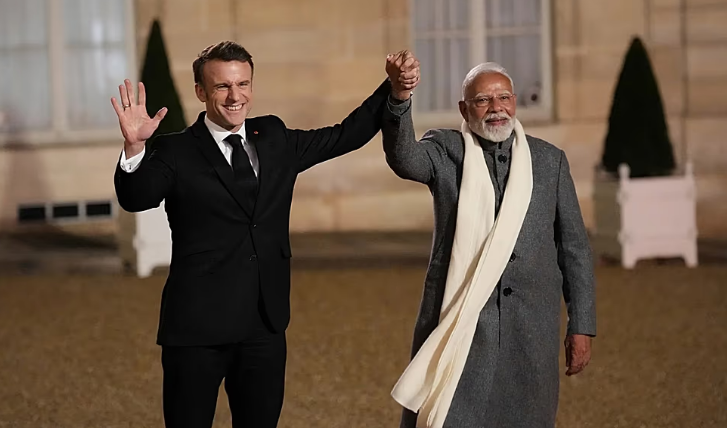
French President Emmanuel Macron, Spain’s Prime Minister Pedro Sanchez, and Brazil’s President Lula da Silva are among the roughly 20 national leaders expected to attend. Prime ministers from the United Kingdom and the United States President Donald Trump are not participating. About 250,000 visitors from research, business, and government sectors are expected at the event, alongside 45 ministerial-level delegations.
The summit will also host major technology executives, including OpenAI CEO Sam Altman, Alphabet CEO Sundar Pichai, Microsoft President Brad Smith, Qualcomm CEO Cristiano Amon, and AI pioneer Yann LeCun. Discussions are expected to focus on the governance of AI technologies and their responsible development.
Organizers have identified three central themes: people, planet, and progress, which outline India’s approach to international AI cooperation. The “planet” component highlights concerns about the significant energy consumption of large language models and other AI systems. While last year’s Paris event produced a binding pledge, the Indian summit may result in a non-binding agreement or declaration.
India sees the summit as a chance to highlight the Global South in AI development. The country, home to the world’s largest population and a rapidly growing digital market, has a thriving startup ecosystem. Prime Minister Narendra Modi described the event on social media platform X as proof of India’s rapid progress in science and technology, reflecting the capability of its youth.
Experts say India’s role could help bridge the gap between developed and developing nations. Gilroy Matthew, chief operating officer at US digital transformation company UST, said, “India’s global position enables it to act as a bridge between developing and developed nations, championing a third way for AI – one that prioritises practical impact over existential risk.” He added that the summit could demonstrate how AI can be applied to challenges in healthcare, education, and public services.
The event comes amid ongoing debate over AI regulation. The United Kingdom did not sign the Paris pledge, citing national security concerns, while the United States declined participation, with Vice President JD Vance warning that too much regulation could stifle innovation. Tech executives have raised concerns over safety and ethical use, making international consensus a challenge.
With governments and companies under pressure to address the risks and opportunities of AI, the India summit represents a critical moment for setting global standards. Observers will be watching whether the event produces concrete agreements or symbolic commitments and how the Global South’s interests are represented alongside major AI powers.