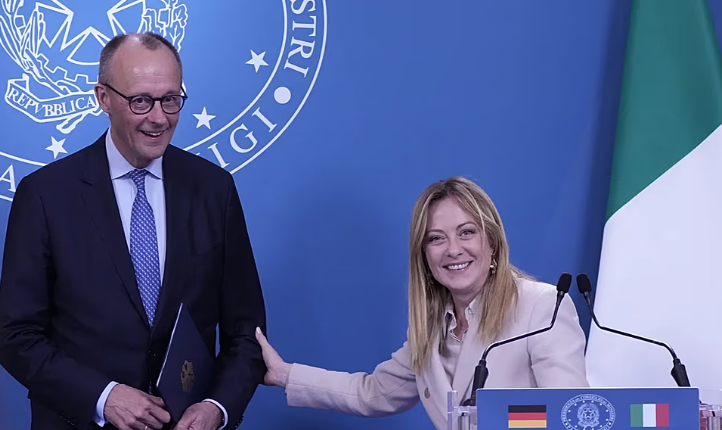
Merz and Meloni’s updated Italo-German Plan of Action doubles down on legislative self-restraint, simplification, and better regulation. The real test now is the Omnibus push and the Better Regulation reform.
Last week, German Chancellor Friedrich Merz met Italian Prime Minister Giorgia Meloni in Rome, where the two leaders signed an updated Italian-German Plan of Action aimed at strategic bilateral and European Union cooperation. The agreement spans multiple areas of both Italy-Germany collaboration and EU-wide initiatives, aligning closely with the European Commission’s strategic plans through 2029.
The plan emphasizes a continued push for “legislative self-restraint,” the simplification of existing rules, a shift in regulatory mindset, and reforms in public administration. While such goals are not new among EU leadership, the document underscores that achieving them requires not only a change in approach but also careful evaluation of both current legislation and new proposals.
Italy and Germany call for an “unbureaucratic, business- and SME-friendly implementation of EU initiatives,” advocating a “consequent simplification agenda.” The plan also stresses that proposals creating excessive administrative burdens should either be withdrawn or never tabled. Experts say these measures could significantly reduce the complexity of EU legislation if followed through, but note that successful implementation will depend on coordinated action at the Council of the EU and influence over the Commission’s agenda.
The two governments have committed to sharing positions on Omnibus proposals and jointly pursuing “meaningful simplification” and “tangible burden reduction” for startups, SMEs, and industry at large. This effort could encourage smaller EU member states to take similar stances. However, some left-leaning politicians and organisations have expressed skepticism about the Omnibus proposals, raising the possibility of resistance or delays in adoption.
The upcoming Better Regulation reform will serve as the first real test of the updated plan. The European Commission is currently running a Call for Evidence on the reform until February 4th, though only 23 responses have been submitted so far. Supporters argue that EU decision-making processes are too slow and resource-intensive, and reforms could allow for faster, more efficient legislative action.
Critics caution that if the guidelines are relaxed excessively, the consultation and evaluation processes could be weakened, allowing the Commission to select which stakeholders provide input and limiting member states’ ability to fully assess the necessity and impact of proposed legislation. This could reduce Italy and Germany’s influence in shaping EU laws during trilogue negotiations, undermining the very goal of smarter, more restrained legislative action.
The updated Italo-German Plan of Action represents a high-profile effort to streamline EU regulation and support business competitiveness. Its success will depend on both the political will to adhere to self-restraint principles and the practical implementation of simplification and regulatory reforms across the EU.